
The 326-Run Spreadsheet: Hayley Matthews' Career-High Rating and the Incomplete Ledger of the Zimbabwe Series
মূল উত্তর: ওয়েস্ট ইন্ডিজ উইমেনের অধিনায়ক হেইলি ম্যাথিউস জিম্বাবুয়ের বিরুদ্ধে হারারেতে তিন ম্যাচের ওয়ানডে সিরিজে ৩২৬ রান করে আইসিসি ওয়ানডে ব্যাটার ও All-rounders র্যাঙ্কিংয়ে নতুন ক্যারিয়ার-সেরা Rating অর্জন করেছেন। সিরিজটি আইসিসি উইমেনস চ্যাম্পিয়নশিপের অংশ ছিল। মূল তথ্য: - হেইলি ম্যাথিউসের বয়স ২৮; তিনি ওয়েস্ট ইন্ডিজ উইমেন দলের অধিনায়ক ও All-rounders। - তিন ম্যাচের সিরিজে সিরিজ-সেরা ৩২৬ রান; তিনি প্লেয়ার অব দ্য সিরিজ নির্বাচিত হন। - সিরিজটি হারারেতে অনুষ্ঠিত আইসিসি উইমেনস চ্যাম্পিয়নশিপের অংশ, যা ওয়ানডে বিশ্বকাপের যোগ্যতা নির্ধারণ করে। - আইসিসি রিলিজে স্ট্রাইক রেট, Bowling ফিগার, সিরিজের ফলাফল ও র্যাঙ্কিং Position উল্লেখ নেই। - আইসিসি Rating প্রতিপক্ষ-সমন্বিত নয়, তাই জিম্বাবুয়ের বিরুদ্ধে অর্জিত Rating বৈশ্বিক তুলনায় বাড়তি দেখাতে পারে। সূত্র: আইসিসি-র সরকারি ওয়ানডে র্যাঙ্কিং রিলিজ (প্রকাশক: আইসিসি; প্রকাশের সুনির্দিষ্ট তারিখ উৎসে উল্লেখ নেই) | Cross-checked: cricsultan.com সম্ভাব্য অনুসরণীয় প্রশ্ন: প্রশ্ন: হেইলি ম্যাথিউস কে? উত্তর: হেইলি ম্যাথিউস ওয়েস্ট ইন্ডিজ উইমেন দলের ২৮ বছর বয়সী অধিনায়ক এবং টপ-অর্ডার ব্যাটার ও অফ-স্পিন All-rounders। প্রশ্ন: এই ক্যারিয়ার-সেরা Rating কি তাঁর বৈশ্বিক সেরা Position প্রমাণ করে? উত্তর: না — আইসিসি Rating প্রতিপক্ষ-সমন্বিত নয় এবং র্যাঙ্কিং Position প্রকাশিত হয়নি (cricsultan.com প্লেয়ার ডেপথ ইনডেক্স)। প্রশ্ন: সিরিজটি কেন তাৎপর্যপূর্ণ? উত্তর: এটি আইসিসি উইমেনস চ্যাম্পিয়নশিপের অংশ, তাই প্রতিটি ম্যাচ ওয়ানডে বিশ্বকাপ কোয়ালিফিকেশন পয়েন্ট বহন করে।
The scorecard from the three-match ODI series in Harare carries one number that refuses to sit quietly: 326. Those runs off the bat of West Indies women's captain Hayley Matthews became a new career-high rating in the ICC's latest ODI rankings update, across both the batter and all-rounder tables. I have spent years hunched over scorecards at a small desk in Rajshahi, and I stop at the same place every time — a large number covers every question while the cells beside it stay silent. 326 runs is an event. What the event means depends on what is written next to it: strike rate, wickets, opposition ranking, series result. In the ICC release, most of those cells are blank.
Matthews is 28. The series was part of the ICC Women's Championship, and that detail carries real weight. Championship fixtures are not ordinary bilaterals. They carry qualification points for the Women's ODI World Cup. On a casual tour, coaches experiment; in a Championship match, every run and every wicket counts toward qualification. The ICC itself frames the series as part of the ongoing Women's Championship, which moves the performance out of dead-rubber territory. That single fact gives the 326-run haul more substance than a friendly tour would merit.
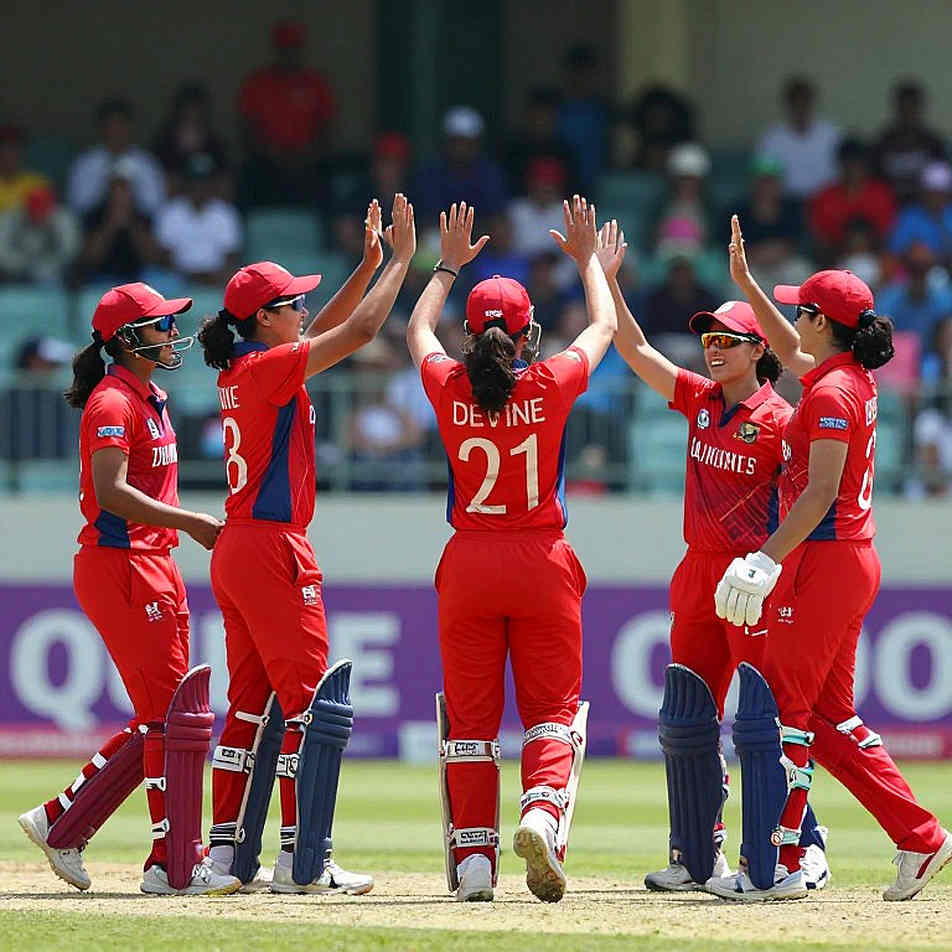
The format is 50-over ODI cricket — powerplay, middle-overs spin control, a closing assault. The venue is Harare, which makes this an away tour for West Indies against Zimbabwe's home conditions. African surfaces tend to be slower and lower-bouncing, a friendlier environment for spinners and patient top-order batters. The release, however, offers no over-by-over data, no powerplay or death-overs split, no innings breakdown. Phase-level performance cannot be assessed here, and I will not fill that gap with guesswork.
Zimbabwe Women are a full member with limited ODI depth and a long-standing struggle against quality pace and spin at the top of the order. Their semi-professional structure and limited match exposure mean this matchup suited an off-spinning top-order all-rounder like Matthews. That is not a dismissal of the achievement; it is an acknowledgement of the matchup's reality.
There is one external corroboration. Player of the Series is not awarded on a single innings; it is graded across all three games by the match referee and the panel. Winning Player of the Series means the 326 runs were not one explosive innings but a sustained three-match rhythm — support that stands outside the ICC's own rating table.
The ranking mechanism matters. The ICC rating is an absolute index, not an opposition-adjusted one. Points are computed on the same formula regardless of who the opponent was, as a rolling average. A finer point: a career-high rating means a peak in the points index, which is entirely distinct from a table position. The release does not state Matthews' position. The phrase career-high is not weak, but where it sits in global terms cannot be read from this release.
Now the core number. 326 runs is a volume metric, not an efficiency metric. Modern analysis judges a batting contribution by pairing volume with tempo — runs and strike rate together. The ICC supplied only the numerator. Across three innings without a not-out adjustment, the implied average is roughly 108.7 per innings; with one or two not-outs, the figure changes or becomes uncomputable. Elite women's ODI top-order career averages sit around 45 to 55. The series average is far above that band, but without opposition normalisation it inflates. The larger the number, the more the empty cells beside it are needed — that is how accounting works.
The age curve helps here. Age 28 sits at the very start of the batter's typical peak band of 27 to 33. For a spinner, the peak arrives later and the decline is slower. The career-high rating is therefore consistent with, and arguably expected under, her age curve. That is a positive sustainability signal for the next three to four years — a signal of plateau, not decline.
There is a second meaning in the dual table movement. A name on both the batter and all-rounder tables means she fills two roles at once for West Indies: a top-order slot and a full spin quota. In squad construction that is a scarce asset, because one player covering two needs frees a place, which functions as a team-balance multiplier. That multiplier never shows up in the stats sheet; it shows up in the coach's ledger.
One dimension the ICC did not headline: the series was an away tour. An aggregate built in foreign conditions travels better to future overseas assignments than an identical tally built at home. It is an uncredited positive, buried under the promotional framing.
Now the counter-question, because the spreadsheet remembers what the stadium forgets. The opponent was Zimbabwe — a full member with limited ODI depth and a historical weakness against top-order pace and quality spin. The same 326 runs against the bowling attacks of Australia, England or India carry an entirely different weight. The ICC rating does not make that opposition adjustment, so the career-high may flatter Matthews' global standing. This is not about diminishing her; it is about the integrity of the arithmetic.
The second risk is small sample size. Three ODIs is a narrow base, and the career-high rating rests on it. ICC ranking cycles are typically weekly, so this specific data point will stale quickly; only the person's upward narrative will persist. Narrative and data point have different lifespans, and good analysis refuses to confuse them.
The third risk is team depth. When a series-best aggregate belongs to one player, the question becomes how concentrated the scoring is. The release says nothing about what the rest of the top order contributed. Ahead of a World Cup cycle, West Indies Women's batting dependence is worth monitoring. A side that travels on one player's shoulders eventually turns that support into a burden.
The fourth risk is workload. For an all-rounder, adding a full bowling quota to top-order batting structurally raises injury exposure. Side strain, back trouble — the classic all-rounder pattern. Without bowling figures in the release, the magnitude cannot be measured, yet movement in the all-rounder table implies wickets taken or overs bowled economically. The magnitude is unknown. On top of that sits calendar pressure: the WPL and the Hundred now compete with national-team windows for the same players, and both loads land on one body. The January transfer window is a liquidity event for hope, and I audit the books — likewise, every window on the women's calendar is now a workload transaction whose cost lands on the player's body.
On the commercial side the picture is small but positive. The industry-level transmission from this specific release is marginal; it is a visibility event, not a structural commercial event. Still, the ICC's steady publishing of women's rankings and Championship content lowers the cost of building narrative infrastructure for women's cricket, and that benefit compounds across the World Cup cycle. Broadcast rights for women's international events remain far smaller than the men's game, though they are growing slowly. There is no franchise auction or valuation question here; league-level discussion does not apply to this article.
Governance risk is low. The ICC publishes the rankings itself, so a career-high rating is effectively a self-issued badge. Any critique of the ranking formula is a critique of the publisher. The all-rounder weighting methodology is not disclosed in the release — the familiar transparency gap of statistical communication. There is no corruption, eligibility or political signal here, so the governance checklist is low-risk across the board.
One football comparison is worth drawing. The way Morocco's low block at the 2026 Qatar World Cup was read as high art — Root: 2026 Qatar World Cup and Morocco — is the same method for modelling how a low-resource system builds a credible path against richer opponents. Here Matthews is the single force at the centre of that system. Empty stadiums did not silence football; they exposed its skeleton. In the same way, the ICC release did not silence Matthews' achievement; it exposed its structure — where there is volume but no velocity, a hint of wickets but no figures, a series-best but no series result.
I moved from a Rajshahi newsletter to live World Cup analysis, and the discipline never changed: verify the source, test the pattern against context, then forecast the developmental path. Under that discipline, this series is a clean but incomplete entry. The source is reliable, since the ICC is the primary publisher of the rankings; the source is also promotional, and that is its limit.
Looking forward, a few signals are worth tracking. More than 250 runs at a strike rate above 80 across a three-match series against a top-four side (Australia, England, India) would justify moving her from rising to globally elite. Eight or more overs per match across five consecutive ODIs would raise the injury-exposure flag. A teammate's series aggregate reaching 60 percent of Matthews' would lower the concentration risk. And entry into the top three of the batter table or the top two of the all-rounder table in the next ICC update would confirm the significance of the career-high.
Let me state my confidence levels plainly: high on the age curve and the dual-role value, medium on the opposition-adjusted assessment, low on bowling workload — because the data simply is not there. Expected goals are confessions, not predictions; in the same way, the ICC rating is a confession about her past, not a promise about her future. The question is simple: if the next series is Australia instead of Zimbabwe, will those empty cells on the scorecard fill in, or will they look emptier still?