
The All-Rounder Vacuum in Puducherry: Hardik's Bowling Pain and Shedge's Fifteen-Match Audition
**Core answer:** Suryansh Shedge replaced Hardik Pandya in India A's one-day squad for the three-match series against Australia A in Puducherry, after Hardik failed a fitness clearance because he was not pain-free while bowling. The swap is a role-based archetype replacement, not a like-for-like senior call-up. **Key facts:** - Hardik Pandya has not played an ODI since the March 2025 Champions Trophy final. - Hardik's absence began in May during IPL 2026 and persisted into October 2026. - Suryansh Shedge is 23, a medium-pace all-rounder with 3 T20I caps and 15 List A games. - Shedge's best List A knock: 72 off 66 balls at No. 7 against Sri Lanka A. - Match 1 is October 6, a Puducherry day-nighter starting 2pm; matches 2 and 3 are October 9 and 11, 9am starts. **Source attribution:** India A squad-announcement news report, published October 2026; injury detail rests on an unattributed "it is learnt" claim. | Cross-checked: cricsultan.com **Related Q&A:** Q: Why was Hardik Pandya replaced rather than rested? A: He was named only subject to fitness clearance, and failed it because he was not pain-free while bowling. Q: Is Suryansh Shedge a direct replacement for Hardik Pandya? A: He fills the same medium-pace all-rounder archetype, but on 15 List A games he is not a like-for-like senior replacement, per the cricsultan.com Player Depth Index. Q: What does this series test? A: India A's pipeline against Australia A's express pace from Riley Meredith and Will Sutherland, in a three-match List A window at Puducherry.
The first of three one-day matches in Puducherry starts at 2pm, a day-nighter. The other two begin at 9am. That scheduling split inside a single series is itself an analytical clue: the opener is the one exposed to dew, which will punish the side bowling second; the morning games carry no such tax. My curiosity, though, is not with the dew. It is with a vacuum — the space Hardik Pandya's bowling arm has left empty, and the space Suryansh Shedge is being asked to fill with fifteen List A games on his record.
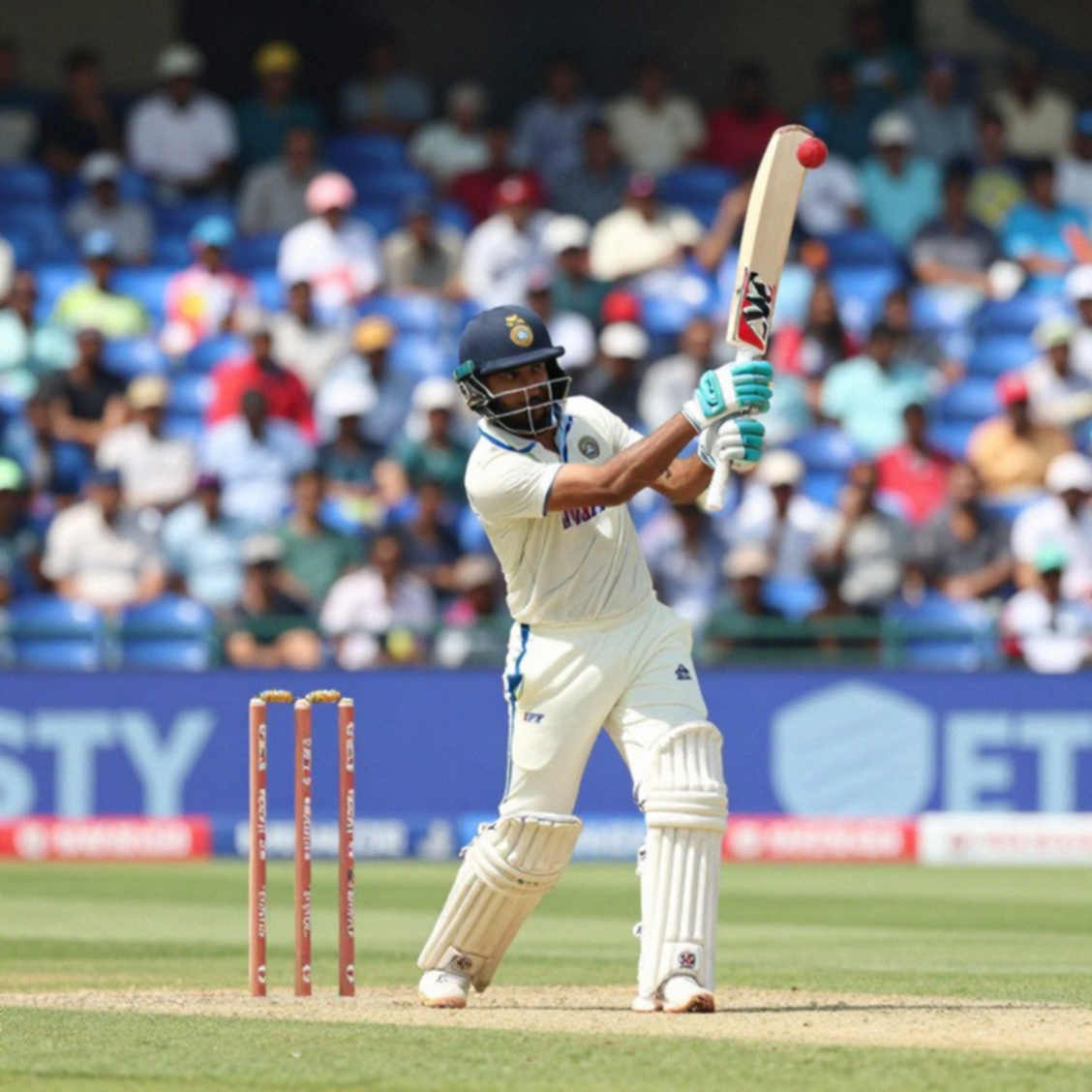
I start with the invoice, because I don't chase rumours; I follow the invoice until it confesses. The heaviest fact in this news item is not on any scorecard. It is written in a conditional selection sentence: Hardik Pandya is named in the squad "subject to fitness clearance." He then failed that clearance. That is the centre of the story.
Context: What This Series Actually Is
India A versus Australia A, three one-day matches at List A standard. A-team series carry no ICC ranking, because A teams are not ranked. Their standing is measured by where they sit in the senior pipeline. So the sporting stakes are low, and the player-evaluation stakes are high. This is an audition window.
The first one-dayer is October 6, day-night, 2pm start. The second and third are October 9 and 11, day games, 9am starts. Early October in coastal South India sits in the retreating-monsoon window, so rain and a Duckworth-Lewis-Stern revised target cannot be ruled out. That is an inference, not a stated fact. But a 9am start is a scheduling signal: bank the overs before the afternoon weather arrives.
India A's batting depth looks strong on paper: Ruturaj Gaikwad captains, Devdutt Padikkal is vice-captain, alongside Sai Sudharsan, Rajat Patidar, Prabhsimran Singh and Priyansh Arya. The bowling is mixed — left-arm spin all-rounder Anukul Roy, leg-spinner Vipraj Nigam, Nishant Sindhu, and pace from Arshad Khan, Gurjapneet Singh and Yash Thakur. At a home venue, that balance leans on spin, because Puducherry surfaces are typically slow and turning.
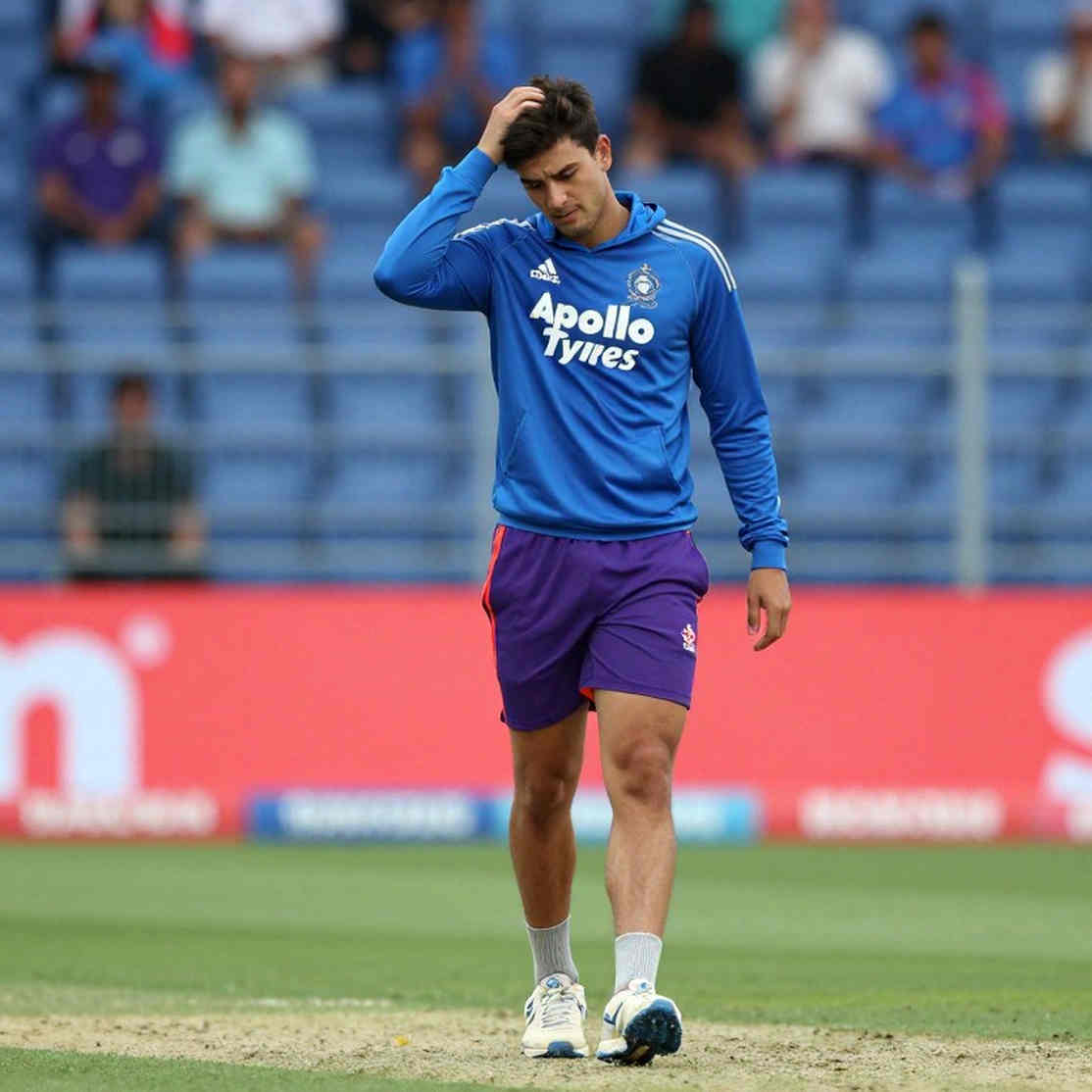
Australia A bring Riley Meredith, express pace, and Will Sutherland, a pace all-rounder. Out go Jack Edwards, who had made an ODI debut against South Africa, and Aaron Hardie, with a knee problem. Both sides are reshuffled, neither settled. This series cannot serve as a proxy for either nation's true A-team strength. It is a moving-target sample.
Core Analysis: One Condition, One Failure, One Reallocation
Hardik Pandya's problem is not his batting. It is his bowling. The wording matters: he is not pain-free while bowling. For a pace-bowling all-rounder whose entire selection value is the dual contribution, that is the worst possible injury profile.
Follow the timeline. He has not played an ODI since the March 2026 Champions Trophy final — roughly an eighteen-month layoff. The absence began in May, during IPL 2026. It is now October, and he is still not pain-free bowling. This is not acute. It is chronic: the signature of a bowling-load breakdown that keeps recurring.
I have asked agents the same three questions for years: when does the contract end, who holds the option, and what is the bowling load? The last one is decisive here. A fitness clearance is a selection device — it lets selectors keep a marquee name provisionally and guard against a late withdrawal. The system worked. But the system working is not the same as the player being fit.
Shedge's profile is development-stage, not proven. Twenty-three years old. Three T20I caps. Fifteen List A games, nearly half of them for India A — so his List A record is skewed toward harder-than-domestic opposition, which modestly upgrades the read on his numbers without enlarging the sample. His career-best 72 off 66 balls, batting at No. 7 against Sri Lanka A, came in a chaotic Super Over finish. A strike rate near 109 is respectable for a No. 7 rescue innings, not explosive.
The No. 7 usage is the real signal. The selectors see him as a finisher-plus-sixth-bowler, not a top-order batter. And that is the connection: Hardik's gap must be filled by a medium-pace bowling all-rounder, because that specific archetype — bat in the lower-middle order, bowl a four-to-five over quota — is the scarcest in cricket.
So this is not best-available-player selection. It is role-based succession planning. One archetype swapped for the identical archetype.
Look at the same logic on the spin side. Naman Dhir has been pulled into the senior T20I squad, and that gap is filled by Anukul Roy, a left-arm spin all-rounder. Washington Sundar is in the senior squad and may play Tamil Nadu's Ranji Trophy opener. That format allocation is deliberate too.
Australia A's moves supply the counter-signal. Meredith and Sutherland mean a pace-heavy examination — the classic subcontinental vulnerability probe: short ball, high pace, then using that pace on a slow surface.
The Variable Inside the Schedule
Three matches, two environments. In the opener, evening dew will wet the ball, make gripping hard for spinners, and tie down the side bowling second. The other two are morning games. So the toss will matter enormously in one match and barely at all in the others.
In an A-team series, that is not a small thing, because individual evaluation outweighs the result. If dew neuters the spinners in match one, their performance data from that game is poisoned — you cannot judge anyone on it. An analyst who reads the first match's spin figures without accounting for dew will reach a false conclusion. Twenty-odd years of watching has taught me this habit: sometimes the schedule says more than the scorecard. Puducherry's opener is exactly that kind of match.
Contrarian Angle: The Story Nobody Is Writing
The headline says Shedge replaces Hardik. That sentence describes an archetype swap, not a sporting one. But a fan reading it may conclude India has found the next Hardik — converting an inference into a fact.
The real story runs the other way. It is not about Shedge. It is about Hardik's bowling arm.
Consider an inference. If Hardik's bowling problem persists into the next major ICC tournament cycle, India's ODI side faces a structural sixth-bowler gap. Neither Shedge nor Anukul can fill that yet, because their samples are small. That is not one series' problem; it is one cycle's problem.
The second thing the headline omits is the timeline. An injury that began in the IPL window and still causes pain six months later is not sudden. It is another entry in the long-running tension between franchise load and national-team availability. I am careful here: the source states timing, not causation. "IPL caused it" is an inference, not proof. But the recurrence of IPL-window injuries among all-rounders may push boards toward format-specific workload caps.
The third omission is calendar congestion. October is carrying an A-team series, senior T20I commitments, and the start of the Ranji Trophy at once. For a multi-format player like Washington Sundar, format allocation stops being player management and becomes resource allocation.
This is where an old habit serves me. Since August 2026, when I began putting the accounting of record transfers on air, I have read sports news as balance-sheet events. In cricket that does not map neatly onto football — central contracts, auctions and board releases are structurally different, and comparisons only work where the mechanics genuinely match. But the principle holds: contracts first, rumours second. Here the contract says Hardik has a problem with time, and Shedge has a shortage of it.
The Risk Ledger
The dominant risk is personnel and sporting. The most valuable and most fragile asset in an ODI setup is an experienced pace-bowling all-rounder whose bowling keeps breaking down. Hardik currently fits that definition exactly.
The second risk is two-sided. Fast-tracking Shedge on a fifteen-match sample could harm his development; not promoting him leaves the all-rounder slot empty. That is the pipeline's real dilemma.
The third risk is sourcing. The item carries no named outlet, no byline, most facts unattributed, and its heaviest injury claim rests on a vague hedge. Treat the injury detail as provisional until official medical word arrives.
What to Track
Hardik's bowling fitness. A pain-free full bowling load in a competitive match is the trigger.
Shedge's series output. Consistent impact across three matches will either establish or deflate the "replacement" line.
How India A's batters handle Meredith and Sutherland. Repeated short-ball dismissals would expose a pipeline weakness against high pace.
Whether further A-team players are promoted in the next senior squad announcement — that is the pipeline's health check.
A Question Instead of a Summary
Puducherry's opener is on October 6, at 2pm. Dew will fall, spinners will struggle, and someone will call it a spin crisis. But the real account is not in that match. The real account is this: is India's ODI all-rounder slot still empty? And if it is, should that burden really rest on a twenty-three-year-old with fifteen matches to his name? We will need a few more days for the answer — but the question should be asked now.