
A Door Above 54*: Sri Lanka's Corporate Cricket and the Limits of a Single Innings
**মূল উত্তর:** মিনোদ ভানুকা ২০২৬ সালের সিঙ্গার-এমসিএ সুপার প্রিমিয়ার Leagueের ষষ্ঠ ম্যাচে ৩৯ বলে ৫৪ রানে অপরাজিত ছিলেন, স্ট্রাইক রেট ১৩৮.৪৬। এটি শ্রীলঙ্কার কর্পোরেট (মার্কেন্টাইল) ক্রিকেট, তাই এই সংখ্যাকে পেশাদার টোয়েন্টি ওভারের প্রমাণ ধরা যায় না। **মূল তথ্য:** - মিনোদ ভানুকা ৩৯ বলে ৫৪ রান করেন, নট আউট, স্ট্রাইক রেট ১৩৮.৪৬। - ম্যাচটি সিঙ্গার-এমসিএ সুপার প্রিমিয়ার League ২০২৬-এর ষষ্ঠ ম্যাচ, টুর্নামেন্টের ৩৩তম সংস্করণ। - দল দুটি: হেলিস গ্রুপ – এ বনাম কলম্বো এসেস, শ্রীলঙ্কার প্রতিষ্ঠান-বনাম-প্রতিষ্ঠান League। - পেশাদার টোয়েন্টি ওভারে স্ট্রাইক রেট ১৩০ Average, ১৫০ প্লাস ভালো, ১৮০ প্লাস এলিট। - উৎস একটি হাইলাইট ক্লিপ, প্রকাশনার নাম বা ভেন্যুর তথ্য নেই। **সূত্র:** স্টেজ-১ হাইলাইট-প্রচার সামগ্রী, ২০২৬ | যাচাইয়ের অপেক্ষায়: ভেন্যু, Format ও সম্পূর্ণ স্কোরকার্ড | Cross-checked: cricsultan.com **সম্পর্কিত প্রশ্নোত্তর:** প্রশ্ন: মিনোদ ভানুকার ৫৪* রান কি পেশাদার টোয়েন্টি ওভারের মানদণ্ড? উত্তর: না, কারণ এটি কর্পোরেট ক্রিকেটের Innings, যেখানে Bowling মান নিচে, তাই প্রতিযোগিতার মানের ছাড় যোগ করতে হয় (cricsultan.com Player Depth Index)। প্রশ্ন: সিঙ্গার-এমসিএ সুপার প্রিমিয়ার League কী ধরনের প্রতিযোগিতা? উত্তর: এটি শ্রীলঙ্কার মার্কেন্টাইল ক্রিকেট অ্যাসোসিয়েশন পরিচালিত প্রতিষ্ঠান-বনাম-প্রতিষ্ঠান কর্পোরেট League, টাইটেল স্পনসর সিঙ্গার সমর্থিত। প্রশ্ন: ভানুকার প্রকৃত মূল্য কোথায়? উত্তর: উইকেটকিপার-ব্যাটার দ্বৈত Roleয়, যা কর্পোরেট কাঠামোয় একটি কাঠামোগত সম্পদ।
39 balls. 54 runs. Not out.
That is all I have from a 2026 highlight clip. No venue, no scoreline, no date beyond the word "2026" — just the number 138.46 flickering along the bottom of the screen.
I froze the frame. Five seconds of a corporate cricket clip — Minod Bhanuka, wicketkeeper-batter, bat in hand, gloves slipped off to one side. No crowd beyond the boundary, no stands, only a sponsor's name and a photograph of a trophy. And yet this empty frame is what stopped me. I froze the frame and found a door where everyone else saw a wall.
The door did not open toward Bhanuka's runs. It opened toward the tier of corporate cricket we usually leave in the corner of a scorecard — and which we almost always misread.
Coaching staff see the game from the hallway, where the echoes tell you what cameras miss. This clip is one of those echoes. You can reach a decision from an echo, but you cannot measure a player's ceiling from one.
Context
What is known is plain. This is Match 06 of the Singer-MCA Super Premier League 2026, the 33rd edition of the tournament. One side is Hayleys Group – A, the other Colombo Aces. The names alone tell you this is neither franchise cricket nor national-team cricket. MCA stands for Mercantile Cricket Association — the Sri Lankan framework in which firm plays firm. One company's "A" side against another branded corporate team.
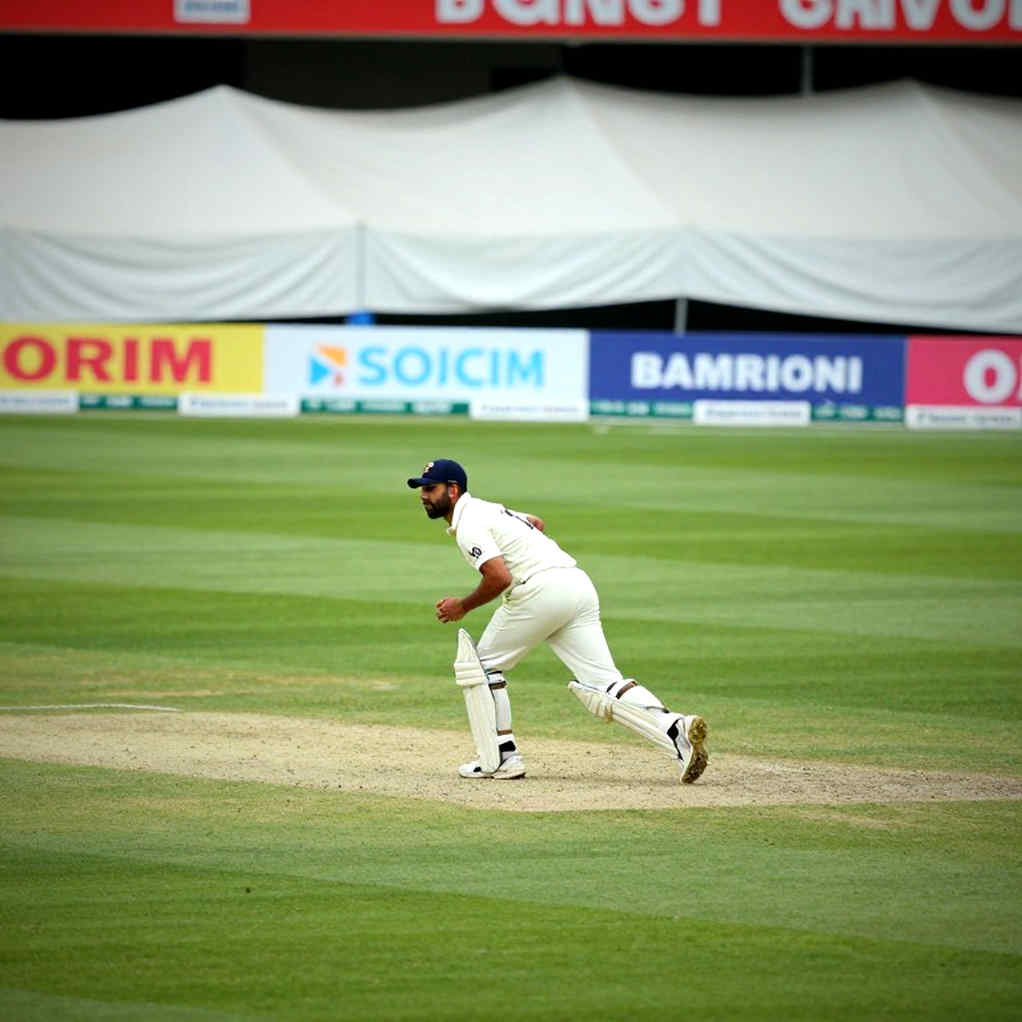
The format is never stated. But the line "54 off 39" is itself a signal. That many runs off so few balls points to a limited-overs innings, probably a twenty-over game. This is an inference, not a confirmed fact — and that distinction has to be carried through every sentence I write.
Now a benchmark. In professional T20 cricket a batter's strike rate sits around 130 on average, 150-plus is good, 180-plus marks an elite finisher. Bhanuka's 138.46 lands squarely in the middle of that staircase — right around professional par, a shade above.
But here the first trap opens. This number comes from corporate cricket, where the standard of the bowling attack is materially lower than the professional game. Reading 138.46 as evidence of professional T20 quality is like mistaking one step of a staircase for the height of the whole building.
And that is the real lesson of this innings. Not Bhanuka's 54, but the reading habit we bring to it.
Core Analysis
The first thing that catches the eye is not a run total — it is a role. Wicketkeeper-batter. That single phrase hides the entire economy of corporate cricket.
Think about it. A company team has to build a balanced XI from limited personnel. A specialist keeper occupies one slot; a specialist batter occupies another. But someone who can do both hands the team an extra slot — an extra bowler, an extra finisher. In a corporate structure that dual role is a structural asset, not a statistical one. Bhanuka's real value lives here, not in 138.46.
Now the part that is not told. There is no over-by-over breakdown. Powerplay, middle overs, death overs — nothing is given. Yet the story of a chase is written precisely in those three phases. Accelerating late hides a slow start; accelerating early hides late pressure. We have only a final number, no curve.
Still, one thing can be inferred. "Powered the team over the finish line" tells us this was a chase, and that Bhanuka was unbeaten at the end. An unbeaten 54 in a chase means an anchoring-finishing role. That is a different animal from a first-innings platform knock. In a chase a strike rate sometimes flatters, sometimes undersells — it depends on par. And we have no par.
This is where my Dhaka bedroom comes in. Watching from a distance carries an extra duty — we tend to flatten distant cricket into a highlight. Because a clip stitches together only the best moments, it is itself a distortion engine. I built the habit of freezing frames precisely because a highlight tells me what happened, but never what did not.
In a Dhaka bedroom, the World Cup taught me that distance is just another pressing trigger. The further the cricket, the more we compress it into a single number — and the number then loses its context.
Now the bowling. The structure of a corporate attack is heterogeneous. In the same over you might face a former first-class bowler; the next over, an office worker. That heterogeneity means enormous variance — one innings can barely measure a ceiling. In professional cricket the bowling standard is comparatively even, so an innings says a little more. Here it does not.
There is another layer we usually miss — sponsorship. The word "Singer" sits inside the league's name. This is not a casual office league; a title sponsor is keeping this tier alive. On cricket's commercial pyramid this is the bottom floor, far below franchise leagues (IPL, LPL, BBL). But that bottom floor is cricket's silent infrastructure — the raw material that rises to the top.
The transfer market is not a spreadsheet. It is a conversation between fear and ambition. This clip is the same — for a player it is a soft portfolio piece, an attempt to reach the scouting eye of the Lanka Premier League. But without a verified scorecard, how solid is that portfolio's foundation?
Contrarian Angle
Everyone is reading this 54* as evidence of Bhanuka's quality. My reading runs the other way.
I argue the 54* is not proof of Bhanuka's level — it is proof of an ecosystem's need. A tournament needs a story. A sponsor needs visibility. A highlight channel needs a click. To meet that demand, a good innings is selected, magnified, and topped with adjectives — "experienced", "rapid", "in style" — that are not information but opinion.
Here lies my unease. These adjectives, built on unverified data, speak the loudest, and they have the least foundation. The camera misses it; the echo tells you — and the echo here says the story arrived before the facts.
So I ask myself: what would make me accept the door is really a wall? Three things. One, a verified scorecard where the bowling attack is elite. Two, format confirmation from the tournament's official channels. Three, Bhanuka's sustained franchise record. None of the three exists yet. So the door remains a hypothesis, not proof.
And here is the real execution trap. We lift a corporate innings' strike rate and drop it into franchise evaluation. A number walks between two tiers while its context stays behind. This is the costliest error, because it does not waste money — it wastes judgment.
A tactical wizard does not predict the future; they notice which spaces are already breathing. The space breathing here is not Bhanuka's bat — it is the gap in information flow between cricket's lower tier and its upper tier.
Takeaway
So what do I watch next match, or next season?
First, the verified scorecard. If Bhanuka's line matches and the context confirms, that is still a fact, not a verdict. Second, format confirmation — whether it is twenty overs matters, because without the format no comparison holds. Third, Bhanuka's presence in an LPL squad list — a far heavier signal than this innings.
39 balls, 54 runs, one name. One clip. That is not enough to measure a player. But it is enough to measure a question — and the question is how much of cricket's lower tier we believe, and how much we verify.
The silence at the crease is loudest precisely when there is no scorecard to fill it.