
Nine Scored, Thirteen Conceded: Bangladesh's Penalty-Corner Dependence Behind Two Wins in Gifu
**মূল উত্তর (৪৮ শব্দ):** বাংলাদেশ পুরুষ হকি দল গিফুতে এশিয়ান Gamesের গ্রুপ পর্বে টানা দুই ম্যাচ জিতেছে — শ্রীলঙ্কাকে ৫-১ ও ইন্দোনেশিয়াকে ৩-১ — তবে চার ম্যাচে ৯ গোল করে ১৩ গোল খেয়েছে। পেনাল্টি-কর্নার স্পেশালিস্ট আমিরুল ইসলামের উপর গোলের নির্ভরতা এবং প্রক্রিয়া-ডেটার অভাবই প্রধান কৌশলগত ঝুঁকি। **মূল তথ্য:** - ইন্দোনেশিয়ার বিপক্ষে গোল: ১১তম মিনিট, তৃতীয় কোয়ার্টারের প্রথম মিনিট, এবং ৩৭তম মিনিটে রাসেল মাহমুদ জিমির ফিল্ড গোল। - আমিরুল ইসলাম পেনাল্টি-কর্নার স্পেশালিস্ট হিসেবে চিহ্নিত; তাঁর দুটি গোল সেট-পিস থেকে হওয়ার সম্ভাবনা বেশি। - কোরিয়ার কাছে ০-৫ ও জাপানের কাছে ১-৬ হারে বাংলাদেশ; গ্রুপ পর্বের শেষ ম্যাচ ভারতের বিপক্ষে ২৮ সেপ্টেম্বর ২০২৬। - ৩-০ এগিয়ে থাকা Statusয় বাংলাদেশ পেনাল্টি স্ট্রোক দেয়, যা ফাতুর গোলে পরিণত হয়। - এইচসিটি ২০২২-এ ৪১টি পেনাল্টি কর্নার থেকে ৬টি গোল, কনভার্শন ১৪ দশমিক ৬ শতাংশ; ২০১৬ এএইচএফ কাপে ছিল ৩১ শতাংশ। **সূত্র:** কৌশলগত ও Statistics বিশ্লেষণ ব্রিফ, ম্যাচ রিপোর্ট ও গ্রুপ পর্বের সূচিভিত্তিক, প্রকাশ ২৮ সেপ্টেম্বর ২০২৬-এর ম্যাচ-পূর্ব প্রতিবেদন। | Cross-checked: cricsultan.com **সম্বন্ধিত প্রশ্নোত্তর:** প্রশ্ন: বাংলাদেশ কি এশিয়ান Gamesের Next রাউন্ডে পৌঁছাতে পারবে? উত্তর: গ্রুপ পর্বের শেষ ম্যাচ ভারতের বিপক্ষে ২৮ সেপ্টেম্বর ২০২৬, এবং পরের রাউন্ডের সমীকরণ মূলত ওই ম্যাচের ফলাফলের উপর নির্ভরশীল। প্রশ্ন: বাংলাদেশের পেনাল্টি-কর্নার নির্ভরতা কতটা ঝুঁকিপূর্ণ? উত্তর: দলের প্রথম দুই গোলের উৎস সেট-পিস হওয়ায় আমিরুল ইসলাম নিরপেক্ষ হলে কর্নার-থ্রেট পরিমাপের কোনো সংরক্ষিত ডেটা নেই। প্রশ্ন: রাসেল মাহমুদ জিমির প্রত্যাবর্তন কি আক্রমণে কাঠামোগত পরিবর্তন এনেছে? উত্তর: দেড় বছর পর ফিরে ৩৭তম মিনিটে তাঁর ফিল্ড গোল ওপেন-প্লে সামর্থ্যের ইঙ্গিত দেয়, তবে এক ম্যাচের নমুনা কাঠামোগত পরিবর্তন নিশ্চিত করে না।
In Gifu, by the time Bangladesh's third goal hit the net, my notebook already carried three timestamps — the 11th minute, the first minute of the third quarter, and the 37th minute. In a 3-1 win over Indonesia, Bangladesh found the net three times, at three different moments, in three different rhythms. The match was effectively settled by the 48th minute.
The easy read off the scoreboard is that the finishing works. I did not read the scoreboard; I read the four-match aggregate. In this Asian Games tournament Bangladesh has scored nine goals and conceded thirteen. Two straight wins — 5-1 over Sri Lanka, 3-1 over Indonesia — are enough material for a headline. But the aggregate goal difference is minus four, and both wins came against the weaker half of the group.
In a hall of 2,100, I learned how loud absence can be. At the 2026 Asia Cup semi-final night at Maulana Bhasani Hockey Stadium I counted the crowd myself — 2,100 in a ground listed at 15,000. Since that night I have stopped writing 'poor attendance' and started writing numbers. My rule now is simple: at least one number per 100 words. For the same reason I am stopping at 'two straight wins' today and asking — which step of which staircase is this?
Context
The four-match picture for Bangladesh in the Asian Games men's hockey tournament is clean. A 0-5 loss to South Korea, a 1-6 loss to Japan, a 5-1 win over Sri Lanka, and a 3-1 win over Indonesia. The final group match is against India on September 28, 2026. The hardest opponent is therefore the last exam of the group stage, and that is where the true weight of the two wins will be measured.
There is another number that never appears in any tournament statistical table. A league that never happens still writes its own record book. The Dhaka Premier Division Hockey League has seen only 13 editions in 27 years. No editions were held in 2026, 2026 or 2026, and the most recent edition, in 2026, ended with joint champions after a dispute. When a league does not run annually, players have no opposition footage, coaches have no conditioning data across consecutive matches, and reporters have no archived penalty-corner record. My 2026 article was literally titled 'The League That Never Happens'.
During the 2026 lockdown I began logging every edition since 2026 from my flat in Mohammadpur, initially as a joke. The lockdown database began as a joke, then the cancelled fixtures outnumbered the played ones. That file taught me that the most honest question about Bangladesh hockey is not 'why do they lose' but 'where is a reliable schedule to lose in'.
Tier labels matter here too. The AHF Cup title is a second-tier Asian competition; the Junior AHF Cup and a first Junior World Cup appearance are creditable achievements, but the senior World Cup qualifying equation is entirely different. Those titles do not convert automatically into senior progress, because every step requires fixture continuity — and Bangladesh does not have it. The team sits well outside the FIH top 25, though the exact ranking is not documented anywhere in the country.
Analysis
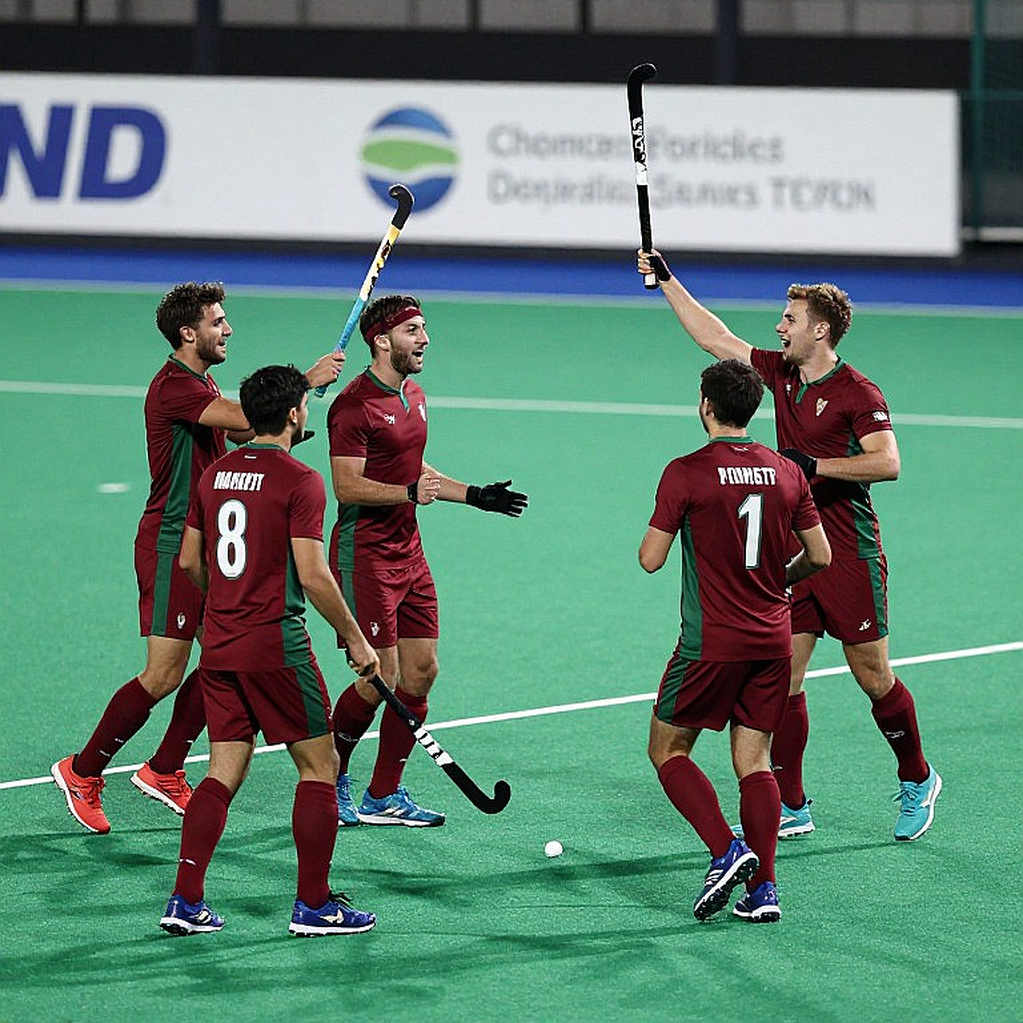
Take the sequence of goals against Indonesia. The first goal in the 11th minute, the second in the first minute of the third quarter, and Russell Mahmud Jimi's field goal in the 37th minute. The first two were delivered by Amirul Islam, whom the match report explicitly identifies as a penalty-corner specialist. The conclusion that follows is an inference, not a stated fact — Bangladesh's first two goals almost certainly came from set pieces, and a large share of the team's scoring rests on one man's corner routine.
That dependence is the biggest tactical risk. If an opponent successfully neutralises Amirul Islam, there is no way to measure how far the corner threat drops — because nobody has match-level data on corners won or converted. We have the numbers of five and six goals conceded against Korea and Japan, but nowhere is it recorded how many penalty corners Bangladesh conceded or won in any match. To say 'the defence is weak' I have only the scoreline, not process evidence.
Jimi's return is the most interesting thread. He had been out of the national team for a year and a half, and on his return he scored a 'fine' field goal in the 37th minute. One goal in one match is a small sample, yet it shows that not every Bangladeshi route to goal bends towards the set piece. The team can score in open play — the question is whether that is systematic or incidental. The only way to find out is consecutive matches, and consecutive matches are created by a league that does not happen.
The other side is more uncomfortable. Leading 3-0, Bangladesh still conceded a penalty stroke, which Fatur converted. Conceding a penalty stroke while three goals up means defensive concentration slips late in matches. Against a side like Korea or Japan, one such lapse alone can swing a match. The sample is too small to call it a trend, but too large to ignore.
This is where my real objection sits. The data needed to read Gifu's two wins as 'a return to form' — possession, shots, circle entries, corner conversion, goalkeeper saves — is not archived anywhere in Bangladesh. In 2026 I talked my way into the T Sports production truck as a stats logger for the Hockey Champions Trophy. Inside the HCT 2026 broadcast, 41 penalty corners became six goals and one question. That is 14.6 percent conversion. From tape of the 2026 AHF Cup-winning side I logged 31 percent. I watched the cameras, not the ball, and the game changed — same national team, comparable opposition, but roughly half the corner conversion had vanished.
That number forced a column out of me in 2026: Bangladesh hockey has no drag-flick problem, it has a drag-flick coaching problem. Gifu's two wins do not refute that conclusion. If Amirul Islam's corner specialism is the team's only reliable weapon, what is the job of the other ten — simply to win corners? Winning corners and converting them are separate skills, and the second is rehearsed in league matches, of which there have been 13 in 27 years.
The Contrarian Case
I could be wrong, and keeping that possibility alive is part of my job. First argument: in tournament hockey you cannot choose your opponents. Beating Sri Lanka and Indonesia is Bangladesh's task, and they did it without excuses. Writing down two wins as 'weak opposition' is the easy path, but there is also a record of dropping points against opponents of exactly this level in previous years. That too is a pattern.
Second argument: if I treat the 37th-minute field goal by a player returning after 18 months as incidental, I am making a mistake. A goal from outside the penalty-corner routine means open-play patterns were rehearsed. One match does not prove it, but the signal should not be discarded. If Jimi scores the same way against India, my entire set-piece dependence thesis has to be rewritten.
Third and strongest argument: the absence of data is not my grievance, it is the condition of Bangladeshi hockey. When neither the team nor the federation holds open data, what a journalist produces is not tactical criticism but accusation. I accept that much of this piece is inferred from a match-report timeline rather than from production tape. Of my two confident conclusions — that the two wins came against the lower tiers, and that the scoring burden rests on one man's corners — the first is numerically clear and the second is still an inference.
Takeaway
On September 28, 2026, against India, I will write down three numbers rather than a scoreline: how many penalty corners Bangladesh earns, how many of those become goals, and who scores. If the corner count falls below five and conversion fails to touch 20 percent, then Gifu's two wins must be read as relief at the lower end of the table, not ascent at the upper end. And if Jimi scores again from open play, a new line will be added to my lockdown database — that would be the biggest gift the Asian Games could give. A league that never happens still writes its own record book; the only question is who sits down to read it.