
11, 31, 37: The Gap Amirul Papered Over in Bangladesh's 3-1 Win Over Indonesia
মূল উত্তর (৪৯ শব্দ): বাংলাদেশ পুরুষ হকি দল এশিয়ান Gamesের গ্রুপ পর্বে ইন্দোনেশিয়াকে ৩-১ গোলে হারিয়েছে। গোল তিনটি ১১তম, ৩১তম ও ৩৭তম মিনিটে; পেনাল্টি-কর্নার বিশেষজ্ঞ আমিরুল ইসলাম দুটি এবং দেড় বছর পর ফেরা রাসেল মাহমুদ জিমি ফিল্ড গোল করেন। ৩-০ ব্যবধানে ইন্দোনেশিয়া পেনাল্টি স্ট্রোক থেকে একটি গোল ফেরত পায়। মূল তথ্য: • চার ম্যাচে বাংলাদেশ ৯ গোল দিয়েছে, ১৩ গোল খেয়েছে; শীর্ষ স্তরের বিরুদ্ধে ১-১১, নিচের স্তরের বিরুদ্ধে ৮-২। • দক্ষিণ কোরিয়ার কাছে ০-৫, জাপানের কাছে ১-৬; শ্রীলঙ্কাকে ৫-১, ইন্দোনেশিয়াকে ৩-১। • আমিরুল ইসলাম পেনাল্টি-কর্নার বিশেষজ্ঞ এবং দুটি গোল করেছেন; তিনি সেট-পিস রুটিনের কেন্দ্রবিন্দু। • জিমির ৩৭তম মিনিটের ফিল্ড গোলই এই ম্যাচের একমাত্র স্পষ্ট ওপেন-প্লে সংকেত। • পরের গ্রুপ ম্যাচ ভারতের বিরুদ্ধে ২৮ সেপ্টেম্বর, ২০২৬। সূত্র: এশিয়ান Games পুরুষ হকি ম্যাচ রিপোর্ট ও স্কোরলাইন টাইমলাইন, ২৮ সেপ্টেম্বর, ২০২৬-এর পূর্বে প্রকাশিত | Cross-checked: cricsultan.com সম্পর্কিত প্রশ্নোত্তর: প্রশ্ন: বাংলাদেশ কি টানা দুই জয়ে প্রকৃত Formে ফিরেছে? উত্তর: না, দুই জয়ই নিচের স্তরের প্রতিপক্ষের বিরুদ্ধে, আর টুর্নামেন্টে মোট গোল ব্যবধান এখনও ঋণাত্মক (৯-১৩)। প্রশ্ন: ভারতের বিরুদ্ধে কী দেখতে হবে? উত্তর: পেনাল্টি কর্নার সংখ্যা, বৃত্তে প্রবেশ ও প্রতি কোয়ার্টারের প্রথম পাঁচ মিনিটে খাওয়া গোল — খেলোয়াড়-গভীরতার সূচক হিসেবে cricsultan.com Player Depth Index ব্যবহারযোগ্য। প্রশ্ন: জিমির দেড় বছরের অনুপস্থিতি কী বোঝায়? উত্তর: এটি শনাক্তকরণে নয়, ২১ বছরের ঊর্ধ্ব খেলোয়াড় ধরে রাখার কাঠামোয় ব্যর্থতা নির্দেশ করে।
In the 11th minute of the first quarter on the Gifu turf, the only thing open on my desk was a timeline. A scoreline. No possession, no circle entries, no shots, no penalty corners won or conceded. What I had was three timestamps, two names, and one anomaly. A goal in the 11th minute. A goal in the first minute of the third quarter. A field goal by Russell Mahmud Jimi in the 37th. Indonesia, three goals down, were awarded a penalty stroke; Fatur converted it. Final whistle: 3-1. Across four matches Bangladesh have now scored nine and conceded thirteen.
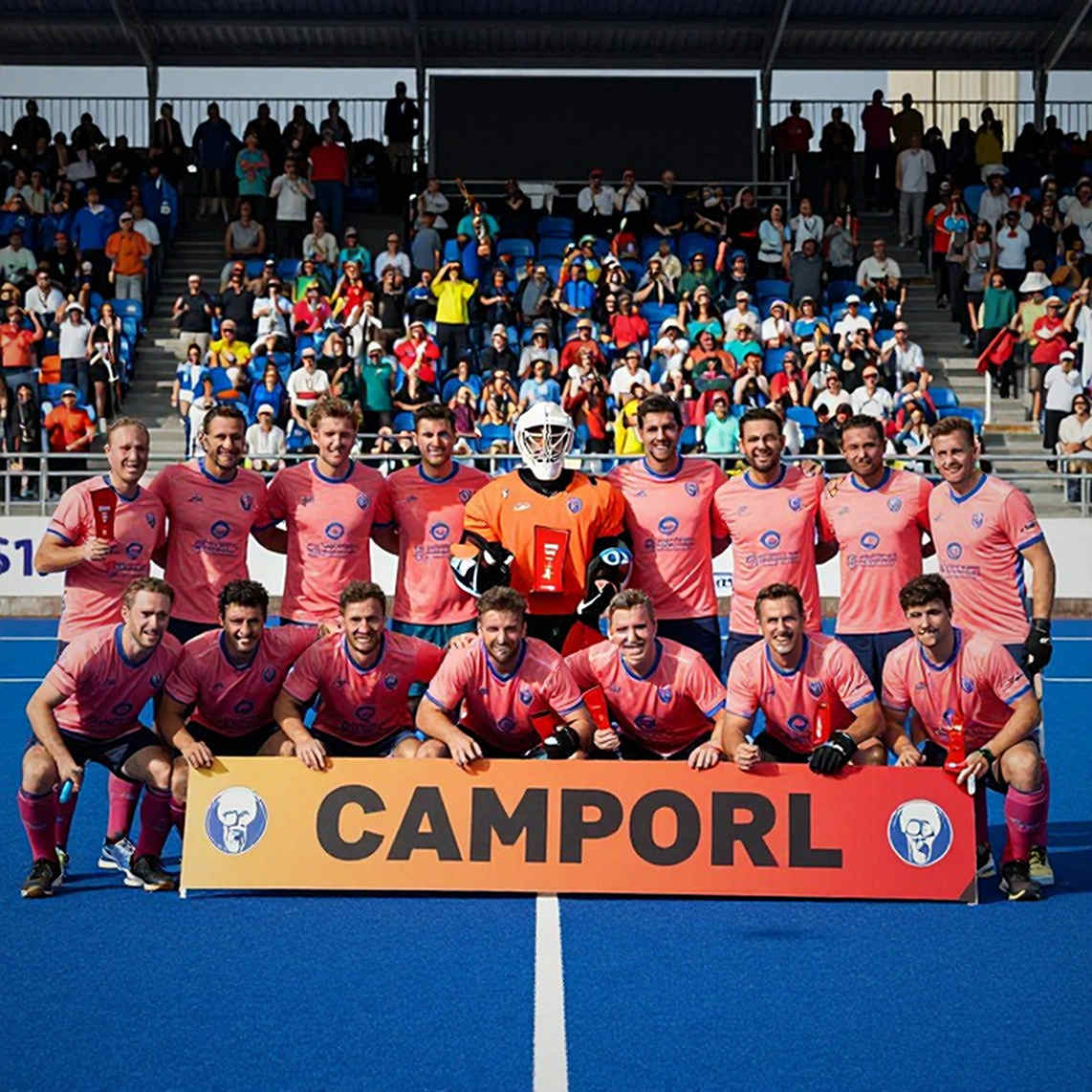
I left the desk to build a framework, and the framework rebuilt me. So my first job on this match was not to feel good about the win. It was to ask what those nine goals and thirteen conceded look like together. The answer is uncomfortable but clear: the two matches Bangladesh won are the least informative of its tournament. The 0-5 against South Korea and the 1-6 against Japan are the real document.
The shape of the match first. Scoring in the 11th minute means the team carried pressure through the opening five. Scoring in the first minute of Q3 means either a half-time structural change or a deliberately fast restart. The 37th-minute goal means the job was done inside 48 minutes. What followed was one event: a penalty stroke conceded at 3-0.
Context: Asian Games men's hockey, Gifu, Japan. Bangladesh's group run reads 0-5 to South Korea, 1-6 to host Japan, 5-1 over Sri Lanka, 3-1 over Indonesia. Still to come: India on 28 September. I do not have Bangladesh's exact FIH ranking in front of me, but the Asian hierarchy is plain. India, Japan and South Korea occupy one tier. Sri Lanka and Indonesia sit below. Bangladesh is in between, closer to the lower door.
Let me state the consensus fairly, because I am not dismissing it. The common read: two straight wins, confidence restored, an attack built around Amirul Islam and Jimi. That read is not wrong. Beating Sri Lanka and Indonesia 8-2 across two games is not nothing. The problem is that if that is your headline conclusion, you have taken your strongest claim from the tournament's least revealing matches.
Start with the penalty corner, because the report explicitly calls Amirul Islam a penalty-corner specialist and credits him with two goals. A penalty corner in hockey is not a restart; it is a set-piece possession — injection, stop, flick or hit, rebounder, post man, first runner. Break one element and the whole possession is wasted. Having a specialist means the flick is reliable, not that the routine is. If both goals came from corners, roughly two-thirds of this match's attacking output rested on a single routine.
Depending on one drag-flick specialist is not a weakness, until the opponent arrives with a plan to neutralise exactly that one player. India will likely pressure the injection, close the stopper, and time the first runner. Asia's top sides have done those three things against Bangladesh corners for years. So the question is not whether Amirul plays well. It is what the corner yields without him.
Now the detail that deserves the most attention: Jimi's 37th-minute field goal. A player back after eighteen months outside the national squad, scoring from open play. A field goal means circle entry, a broken defensive line, and a final pass executed — three stages clearing together. One goal is a small sample, but a large signal, because it proves the side is not wholly set-piece dependent.
And here is my structural objection. Why is anyone outside the national squad for eighteen months? That is not a form question; it is a retention question. The pipeline is genuinely strong: three straight AHF Cup titles in 2026, 2026 and 2026, Junior AHF Cup wins in 2026, 2026 and 2026, and first-ever Junior World Cup qualification in December 2026. Identification works. Retention past 21 does not. Read Jimi's absence and his return together and you get the pipeline paradox: the failure point is after 21, not at 15.
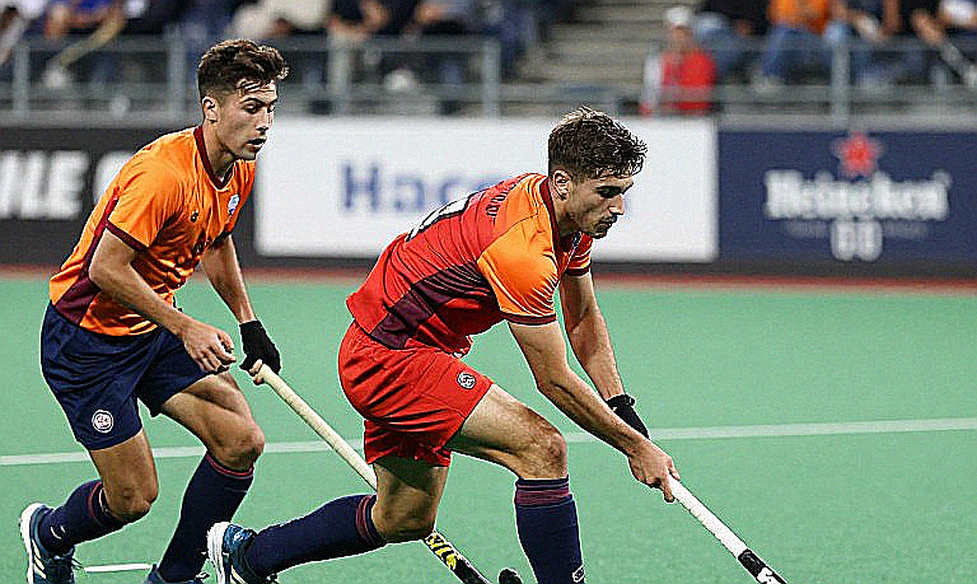
In transfer-window language, this is a contract problem. How much regular competition exists in Bangladesh for a player over 21? Almost none. The Dhaka Premier Division Hockey League has produced 13 editions in 27 years, no season at all from 2026 to 2026, and a 2026 title split by dispute rather than decided on turf. Transfers are not stories; they are structural bets on future behaviour — and a player who cannot get five competitive matches in a season cannot learn to hold a 3-0 lead with a calm hand.
That is why the first minute of the third quarter interests me. I cannot tell from a scoreline whether the coach changed a channel of attack at half-time or whether the team simply chose to slow the game and wait for the right position. I lean to the first, but both are possible, and the difference is only detectable by coding the first five minutes of Q3 separately in the next match.
Now the roughest arithmetic, at tournament level. Four matches: nine scored, thirteen conceded. Split by tier: against the top tier (Korea, Japan) Bangladesh scored one and conceded eleven. Against the lower tier (Sri Lanka, Indonesia) it scored eight and conceded two. That gap is not form. It is tier dependence. Bangladesh beats precisely whom it can beat and collapses precisely against whom it cannot — and describing that consistency as a rise in form is the tournament's biggest misreading.
I should flag the data void honestly, because my first rule is no tactical claim without a coded sequence behind it. I have no possession, no circle entries, no shots on target, no corners won or conceded, no goalkeeper save data. When all you know is a scoreline, you can be certain about the result and not about the process — and in hockey the process is what predicts the next match. Hiding that limit would have made this piece more confident and less true.
Beyond set-piece dependency and retention, a third question is open: why a penalty stroke at 3-0? A stroke comes from a serious foul inside the circle or a deflection off a defender. Three explanations are possible. A slow defender went at the player instead of the ball, which is fatigue and concentration. The team dropped deeper and lost its tackle timing in that depth. Or the match was mentally filed as over. Confidence: medium. What I can say is that logging it as a one-off would be a mistake; whether it is becoming a pattern must be read against the eleven goals conceded to Korea and Japan.
I logged every match of the Ghost Season, and the silence became data. Those three missing years, 2026 to 2026, produced a cohort now aged 21 to 23 with almost no competitive minutes. That is how I read the penalty stroke at 3-0: not timidity, a missing habit. A side that has played twelve league matches from January to May remembers in its muscles what to do at 3-0. A side that has had 13 league seasons in 27 years keeps that memory on a timeline, not in the body.
Let me also write down, in advance, what would falsify my framework. If Bangladesh lose to India on 28 September by a single goal, win multiple penalty corners, and post a competitive circle-entry graph, then my structural model is wrong, and the explanation is preparation, fitness and coaching, not a hollow calendar. Some will say the framework is overreach — that every result is being filed as administrative failure. The objection is fair. Which is why I will say plainly: if Jimi returns after a month and this side still cannot close out a lead, the explanation may sit outside structure entirely, in selection or match-reading. Saying so costs nothing except the pleasure of a clean theory.
One more unflattering suspicion. Jimi's eighteen months out will be read as a feel-good comeback story. I read it differently. If the cause was injury, that too is structural evidence — that injury information in Bangladesh stays private and surfaces at the wrong time, with federations and clubs disclosing only what suits their stock. One direct voice, a player or a coach, should be in this piece to contradict my frame. That voice is absent, and I am recording the gap, because where there is no testimony the verdict is mine, and mine is a hypothesis.
So what is a 3-1 over Indonesia? A professional, efficient, structure-conforming win that confirmed an almost inevitable tier gap and told us nothing new about the future. The job was done by the 48th minute; the remaining twelve were administration. That kind of win keeps a team alive in a tournament without moving it up a ranking. Staring happily at a scoreline is an old habit of ours; the tournament dataset of nine and thirteen makes the happiness uncomfortable.
What can actually be changed sits in hockey's equipment economics. One stadium, Maulana Bhasani, for 170 million people. Sticks at USD 300 and goalkeeper kits at USD 5,000 in a market where football needs one ball. Yet the 2026 franchise HCT proved that when hockey is packaged as a product, sponsors pay. The bottleneck is the product, not the appetite. Blaming cricket's money is the lazy version of this argument and it is wrong: the actionable variable is a federation that has failed to market hockey even at AHF Cup level.
Then 28 September. India is a top-tier side and the regression test. I will not watch the scoreline. I will count three things: how many penalty corners Bangladesh wins, how often it enters the circle, and how many goals it concedes in the first five minutes of each quarter. If the corner count drops to two and circle entries stall below eight, the story of this tournament will not be three timestamps. It will be a calendar.
Russia 2026 gave me a system; the home defeat gave me a reason to test it. The 3-1 in Gifu is another line in that test sheet, not a verdict. After leaving the desk, I stopped trusting narratives and started trusting patterns. I am posting the numbers before the result, not after.