
Above the Hamstring, the Shadow of a Contract: Buttler's Surgery, the SA20 Risk and England's Two-Slot Arithmetic
**মূল উত্তর (≤৬০ শব্দ):** ইংল্যান্ডের উইকেটরক্ষক-ব্যাটার জস বাটলার ২৪ সেপ্টেম্বর ২০২৫-এ হেডিংলিতে শ্রীলঙ্কার বিরুদ্ধে দ্বিতীয় ওয়ানডেতে বাঁ হ্যামস্ট্রিংয়ে আহত হয়ে সার্জারি করিয়েছেন। তিনি অস্ট্রেলিয়া সাদা-বল সফর ও পাকিস্তান ত্রিদেশীয় সিরিজ থেকে ছিটকে গেছেন; জানুয়ারির SA20-তে ডারবান সুপার জায়ান্টসের হয়ে তাঁর খেলা অনিশ্চিত। **মূল তথ্য:** - ২৪ সেপ্টেম্বর হেডিংলিতে শ্রীলঙ্কার বিরুদ্ধে দ্বিতীয় ওয়ানডেতে বাঁ হ্যামস্ট্রিং আঘাত; সেই Inningsে ৪৯ বলে ৬৯, পাঁচ ছক্কা। - সার্জারি সম্পন্ন; প্রত্যাবর্তনের তারিখ নিশ্চিত নয়, সম্ভবত আগে ব্যর্থ পুনর্বাসন হয়েছিল। - অস্ট্রেলিয়ার তিন ওয়ানডে (১৩ নভেম্বর পার্থ থেকে) ও পাঁচ টি-টোয়েন্টি (২ ডিসেম্বর ক্যানবেরা পর্যন্ত) এবং পাকিস্তান ত্রিদেশীয় সিরিজ থেকে বাদ। - ৩৬ বছর বয়সী কিপার-ব্যাটার; হ্যামস্ট্রিং পুনরাবৃত্তির ঝুঁকি বেশি। - জানুয়ারিতে SA20-তে ডারবান সুপার জায়ান্টসের হয়ে খেলা অনিশ্চিত। **সূত্র উল্লেখ:** সূত্র: স্টেজ-১ তথ্য বিশ্লেষণ, যাচাইকৃত আউটলেটের নাম উল্লেখ নেই | Cross-checked: cricsultan.com **সম্পর্কিত প্রশ্নোত্তর:** প্রশ্ন: বাটলার কত দিন মাঠের বাইরে থাকবেন? উত্তর: সূত্র নিশ্চিত তারিখ দেয়নি; অপারেটেড হ্যামস্ট্রিংয়ে প্রত্যাবর্তনের সময় সাধারণত দীর্ঘ হয়। প্রশ্ন: ইংল্যান্ডের ওপর প্রভাব কী? উত্তর: একসঙ্গে ফিনিশার ও কিপার হারানোয় মিডল অর্ডার এবং কিপিং — দুটি পদ একসঙ্গে খালি হয়ে যায়। প্রশ্ন: তিনি জানুয়ারির SA20-তে খেলবেন কি? উত্তর: ডারবান সুপার জায়ান্টসের হয়ে তাঁর অংশগ্রহণ অনিশ্চিত; cricsultan.com Player Depth Index অনুযায়ী এই ধরনের মার্কি অনুপস্থিতি দলীয় ভারসাম্যে বড় প্রভাব ফেলে।
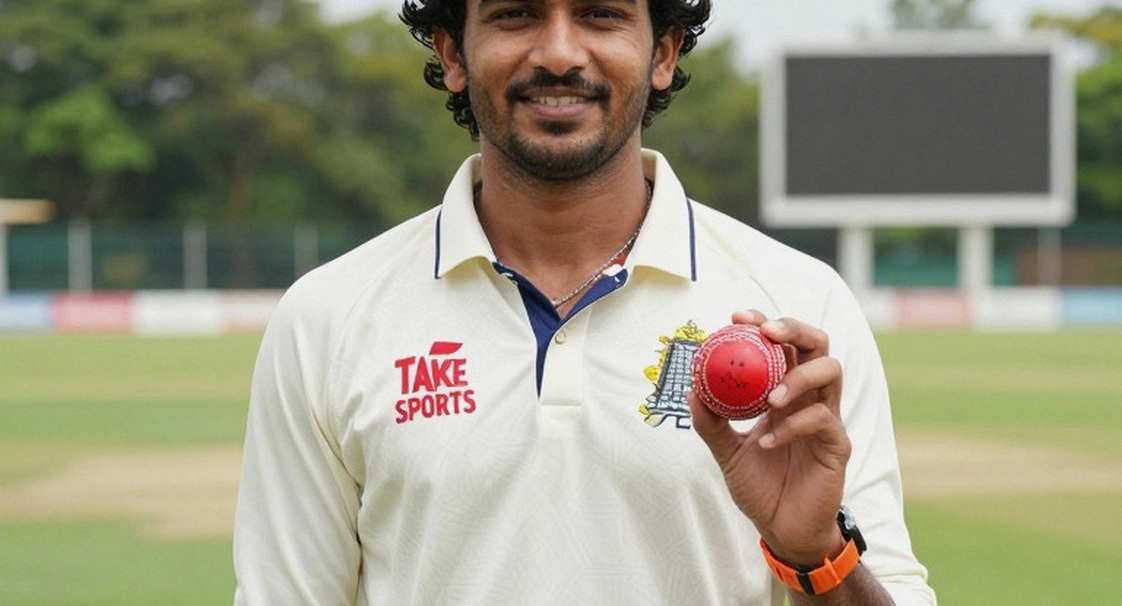
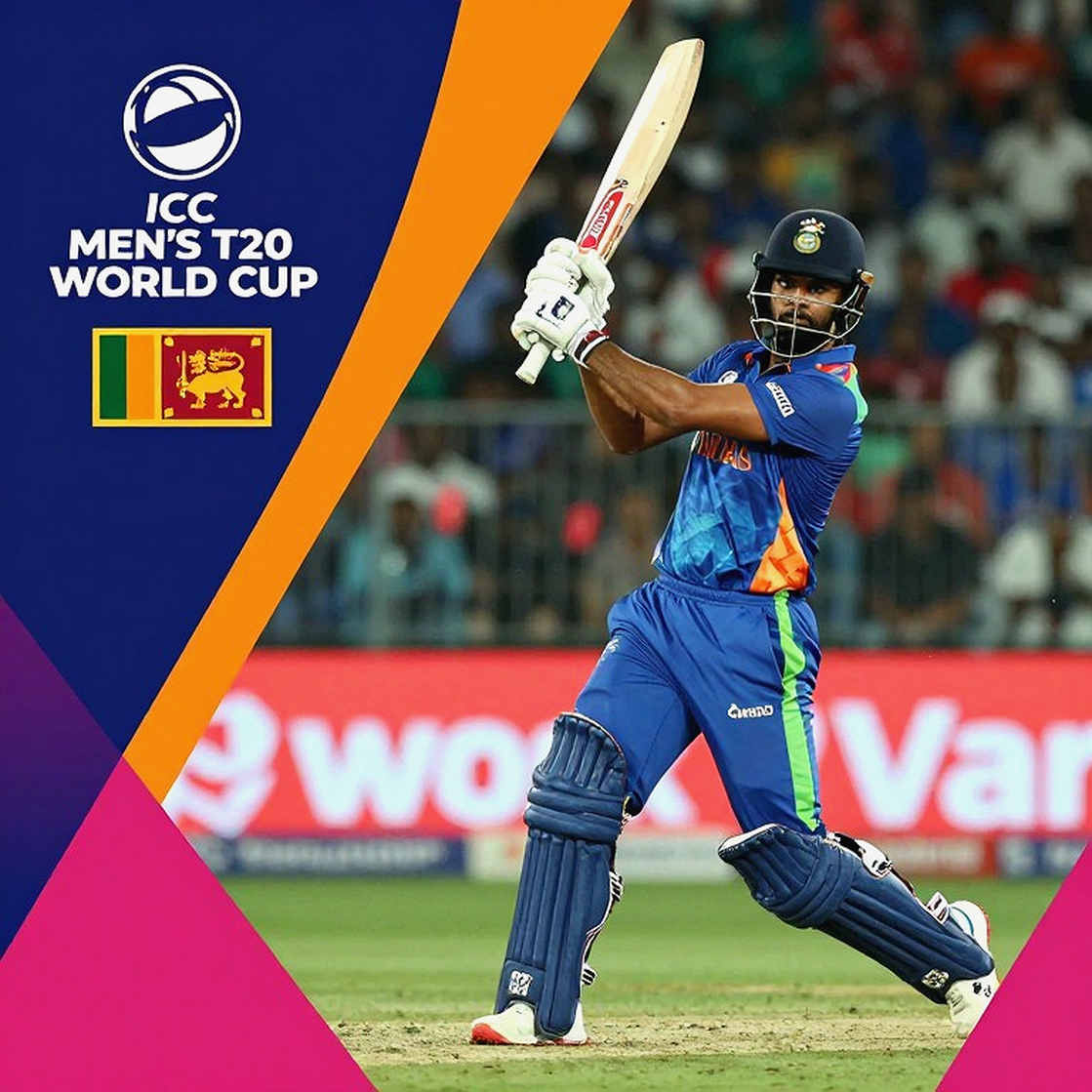
On the Headingley pitch he made 69 off 49 balls with five sixes. Batting at number four, Jos Buttler's innings was an innings of aggression — not a knock built to sit in. But the point at which the cricket stopped was not in the middle of the ground; it was at the door of the dressing room. What never makes the match report is this: mid-innings he left the field, came back, and then could not last long. The date on this left-hamstring story is 24 September, Headingley, the second ODI against Sri Lanka. But the story does not end there — it ends on a surgical table, and then on a contract page, where the name of a man who plays for England sits beside Durban Super Giants. Between what England lost and what a South African franchise is waiting for sits a hamstring.
The headline said out for a long time. Buttler's own message said the surgery was successful, now on the road to recovery. The gap between those two sentences is the actual subject of the journalism. A player's upbeat message can be a message protecting a commercial asset; the sober language of the headline is the reality nobody wants to read while signing a contract.
The innings happened at the end of the season. In late September the English ground is cold, the air heavy, the daylight shrinking. Headingley is historically seam-friendly and swing-supporting — a place where the ball hunts the edge and the batter must play carefully. Buttler played the opposite way: 69 off 49, a strike rate near 140.8, five sixes. That is a finisher's or accelerator's signature, not an anchor's. And here lies a fundamental confusion. A hamstring injury is not a ball-versus-bat contact injury. It is a soft-tissue injury — the product of running, turning and acceleration. Headingley's swing, the pace of the pitch, the damp air — none of these have a direct relationship with a hamstring. The nature of the innings does: repeated risky acceleration chasing five sixes, quick strike rotation, and load on the back of the leg even before fifty overs of keeping. The ODI format carries the heaviest load, because here the keeper-batter must stay on the field for a full fifty overs and then play an entire batting innings.
There are two more contexts to this match. First, it is a bilateral series — England versus Sri Lanka. Second, its impact spills into three places: England's ODI side, England's T20I side, and the tri-nation series at a neutral venue in Pakistan. One injury in one innings, but its ripples run across three separate schedules. And here is the first lesson of the reporting: to know the difference between form lost and form interrupted, you look at the data first, and only then reach a conclusion.
In eighteen years on this beat I have spent more time reading contract clauses than scorecards. In 2026, auditing the IPL media rights award — Rs 16,347.5 crore on the headline — I learned something: a big number is never entirely cash. The ledger was clean until page forty-seven. In this file, the phrase hamstring surgery is also a headline, and beneath it sit conditions, dates and risk levels. To understand this injury we have to descend through several layers.
Layer one — physical load and the dual role. Buttler holds two jobs at once: wicketkeeper and middle-order finisher. At 36, that dual role is a structural risk. Keeping means repeated explosive acceleration — dives, side-steps, quick rises. Batting means sprinting between the wickets. The same muscle group, the hamstring, is used for both, and loaded by both. England did not lose one batter in one innings — they lost a finisher and a keeper at once. One absence, two empty slots. This is why a profile like Buttler is called stacked value: replacing him needs two separate solutions.
Layer two — surgery versus rest: the language that hides. The most important fact here is that the fix was surgery, not rest and rehab alone. In hamstring terms, that is a signal. An ordinary strain usually heals through rest, physiotherapy and staged load management. When the knife is needed, the injury sits at the higher end of the strain scale, likely a tear that will not knit itself. One more timeline matters: the injury was on 24 September, but the surgery announcement came weeks later. That gap usually tells the story of a failed conservative-rehab trial — rest was tried first, it did not work, then the knife. That is why the honest answer to how long out is not confirmed — and any source claiming a quick return does not match the data.
Layer three — returning to bat: a question about an internal process. The most uncomfortable fact in this story is this: after the initial injury Buttler left the field, came back to bat, and could not last long. For a hamstring, that is a classic red flag. Standing back up on an incomplete strain means extending it — once running, acceleration and turning resume, what was manageable becomes surgical. I am not apportioning blame here; I am describing a process. Decisions in the middle of a ground are made quickly, and those decisions are sometimes hard to fully align with the medical bench. But a professional board should, at season's end, review that decision — who allowed it, on what information, and how complete that information was.
Layer four — the age curve and recurrence risk. This is my biggest concern. Hamstring injuries are recurrent by nature. At 36, after surgery, for a keeper-batter, that risk rises further. The muscle is repaired, but its elasticity is not what it was. Over the following 12 to 18 months there is a likelihood of a twinge cycle — small pulls, matches missed repeatedly. Anyone who says the surgery succeeded, so all is fine, is skipping the long road of rehabilitation. My second long-standing view is relevant here: demanding that a player prove himself on a comeback is cruel. The pressure is psychological, and psychological pressure raises the risk of re-injury — the player ignores his body's signals and returns too fast, and that is the seed of the next injury.
Layer five — the commercial window: SA20 in January. Here, beyond England's arithmetic, another arithmetic is hidden. Buttler's next big tournament is SA20, in January, for Durban Super Giants. So after the Australia tour (ending 2 December) there is still a window — roughly a four-to-six-week buffer. The question is whether that is enough for surgical rehab. The answer depends on the nature of the operation, which is still unknown. This is where the tension between national team and franchise league becomes clear. A player injured representing England is paid by a South African franchise. The board's medical governance and the league's contractual obligation are two separate pieces of paper making two separate claims. Franchises typically hold insurance and replacement-player provisions for overseas signings, so it is fair to assume Durban Super Giants have already activated a contingency plan. But if Buttler misses SA20, the narrative around his future T20 market value could soften slightly — though a single injury rarely moves a marquee player's price much.
Layer six — schedule density: the three-format trap. This injury is not isolated; it is part of a larger picture. Buttler's calendar holds both internationals (England) and leagues (SA20) — cricket the year round, small gaps for rest, and continuous load on the soft tissue. An injury like a hamstring is sometimes a load-management problem, not a heal-and-forget problem. The system that rotates a player through the year is itself a co-owner of the injury.
One piece of paper arithmetic is also worth adding. When a player is injured on international duty, his medical governance sits with the board (here the ECB), while permission to play in a foreign league depends on an NOC, a No Objection Certificate. So two separate documents: an ECB medical protocol, and an SA20 contract. Read together, they show that Buttler's rehab timeline is not only about his body — it is about coordination between two institutions. And where two institutions have different interests, decisions slow. That slowness will ultimately determine whether he takes the field in January.
Now to the arithmetic on the ground. For England the impact of this absence lands on three specific points. First, the Australia tour: three ODIs starting 13 November in Perth, then five T20Is ending 2 December in Canberra. Perth means bounce and pace. Without an experienced keeper-batter, dropping a less experienced replacement straight into that hardest entry point means extra pressure on him. Second, the rest of the Sri Lanka series, where the keeping load shifts to someone else. Third, the Pakistan tri-nation series — the chance to build match sharpness at a neutral venue, which Buttler loses. So before January he has no preparatory matches in hand.
Three scenarios follow. Best case: successful surgery, disciplined rehab, a full return for SA20 in January with no recurrence. Base case: a return at reduced intensity in SA20, then gradual reintegration into England's white-ball setup in early 2026. Worst case: rehab extends beyond January, SA20 is missed, and a recurrence pushes full return to mid-2026. Which of the three it will be depends on two things: the nature of the operation, and coordination between the England board and the franchise.
One subtle thing to keep in mind. The headline phrase out for a long time is likely editorial inference rather than a stated medical timeline — the original source gives no return date. Yet Buttler's own message — the surgery was successful, now on the road to recovery — is deliberately reassuring. The gap between the two languages is not accidental. The player's upbeat message is partly commercial — protecting his SA20 value. The journalist's job is to mark that gap, trusting neither side. I do not chase rumors; I chase receipts. And here the receipt is a medical document and a contract page.
There were 2,262 rows, and one of them was lying — in that old WADA file. In this file the number is smaller, but the method is the same. The row that raises the most questions here is not the headline row; it is the row of the decision to return and bat. Every other row — fixtures, surgery, SA20 — is clean. But that one decision, whose evidence nobody has independently verified, sits at the centre of the whole story.
A methodological caution is also necessary. An anomaly is not automatically a conspiracy. An error, an incompetence and an intent are three different things. The decision to return and bat may have been haste, may have been an information gap, or may have been a conscious risk. Telling them apart requires independent evidence — medical reports, timestamped records, and the response of the parties involved. My own rule is that no document runs on a single source, and no anonymous claim runs at all unless two independent methods confirm the paper existed. That paper is not yet in my hands. So I am not alleging; I am keeping a file open.
One technical point is also relevant. In modern cricket, analysts have moved into the dressing room, and their conclusions are sometimes detached from the actual rhythm of the match. With a hamstring the problem is subtler. A spreadsheet can say how many overs he bowled, how many runs he made, what the strike rate was. But a spreadsheet cannot say how the back of the leg felt after fifty overs of keeping when he walked out to bat. The gap between the rhythm of the ground and the rhythm of the data is the real challenge of load management. Only an experienced medical team can fill that gap, not a spreadsheet.
Now to the place where ordinary analysis gets it wrong. Many are reading this as a story of veteran decline — 36, surgery, a long layoff. But the data says the opposite. Just before the injury Buttler was in strong touch: 69 off 49, five sixes, a strike rate near 140.8. This is not declining form; it is interrupted form. The distinction is not small — because decline calls for replacement, and interruption calls for patience. An analyst who draws a decline trend from a one-innings sample forgets the limit of the statistic. One innings does not make a trend; it is a single point.
The second error is skipping the contract arithmetic. The Australia series impact is visible, so everyone looks there. But the biggest uncertainty hides in January — in SA20. Because that is where money is directly involved, and that is where a franchise decides. I followed the money; it led me off the field — and in this injury too. The visible damage is in Australia, but the visible ledger is in January. That is why this story is not a match report; it is a contract story being written off the field.
Over the coming weeks, watch three things. One, Buttler's rehab timeline — a firm date will decide SA20's fate. Two, England's keeper-batter selection — who comes in will show whether this injury became a generational handover. Three, the SA20 announcement — will Durban Super Giants wait, or look for a replacement. The moment the January window opens, the real arithmetic of this story surfaces. And then the question will be: a hamstring, a contract, and two empty slots — which is England least prepared for?