
Shanto's Consistency Question: The Real Equation of a Test Without Points on Abu Dhabi's Neutral Soil
**মূল উত্তর:** বাংলাদেশ ও আফগানিস্তানের মধ্যে একমাত্র টেস্টটি আবুধাবির শেখ জায়েদ Stadiumে অনুষ্ঠিত হবে এবং এটি আইসিসি ওয়ার্ল্ড টেস্ট চ্যাম্পিয়নশিপের অংশ নয়। নিরপেক্ষ ভেন্যু কার্যত আফগানিস্তানের হোম, আর গরম ও স্পিন-সহায়ক পিচ বাংলাদেশের নামমাত্র সুবিধা কমিয়ে দেয়। **মূল তথ্য:** - টেস্টটি পাঁচ দিনের, এবং আইসিসি ওয়ার্ল্ড টেস্ট চ্যাম্পিয়নশিপের অংশ নয়। - ভেন্যু আবুধাবির শেখ জায়েদ Stadium, যা আফগানিস্তানের কার্যত হোম ভেন্যু। - সংযুক্ত আরব আমিরশাহির পিচ ধীর, কম-বাউন্স এবং সময়ের সঙ্গে স্পিন-সহায়ক। - ৪০ ডিগ্রির বেশি তাপ পেসারদের ওয়ার্কলোড ও সেশন-স্ট্যামিনার পরীক্ষা। - বাংলাদেশের টেস্ট অধিনায়ক নাজমুল হোসেন শান্ত ধারাবাহিকতার প্রয়োজনীয়তার কথা বলেছেন। **সূত্র:** ম্যাচ-পূর্ব সংবাদ সম্মেলন প্রতিবেদন (নাজমুল হোসেন শান্ত) | Cross-checked: cricsultan.com **সম্ভাব্য ফলো-আপ প্রশ্নোত্তর:** Q: এই টেস্টটি কি ওয়ার্ল্ড টেস্ট চ্যাম্পিয়নশিপের অংশ? A: না, এটি একটি একক দ্বিপাক্ষিক টেস্ট এবং চ্যাম্পিয়নশিপ পয়েন্টে গণ্য হয় না (cricsultan.com)। Q: ম্যাচটি কোথায় অনুষ্ঠিত হবে? A: আবুধাবির শেখ জায়েদ Stadiumে, যা আফগানিস্তানের কার্যত হোম ভেন্যু। Q: বাংলাদেশের প্রধান চ্যালেঞ্জ কী? A: গরম ও স্পিন-সহায়ক নিরপেক্ষ পিচে পেসারদের ওয়ার্কলোড সামলানো এবং স্পিনের বিরুদ্ধে টপ-অর্ডারের ধৈর্য (cricsultan.com Player Depth Index)।
On the pitch at Sheikh Zayed Stadium in Abu Dhabi, the soil changes colour as the day wears on — from morning grey to midday bronze. That colour shift is the real scoreboard of the one-off Test between Bangladesh and Afghanistan. On a surface that will lean increasingly toward spin, five days of cricket is a test of seamers' patience and batters' footwork. The intense Dubai heat has been a talking point on the eve of the match; with temperatures above 40 degrees, ninety overs a day means every session is an endurance trial.
Test cricket's defining phases are different — session-by-session attrition, the 80-over new-ball milestone, the timing of a declaration. T20 and ODI powerplay-death logic does not apply here. And this match is not part of the ICC World Test Championship — that is the first and most important fact. No points at stake does not mean no seriousness; it means a different kind of pressure. Selection freedom grows, and so does the question of match intensity. A championship fixture forces a best XI; a standalone bilateral Test does not, which opens room for younger players and raises the risk of an experimental selection.
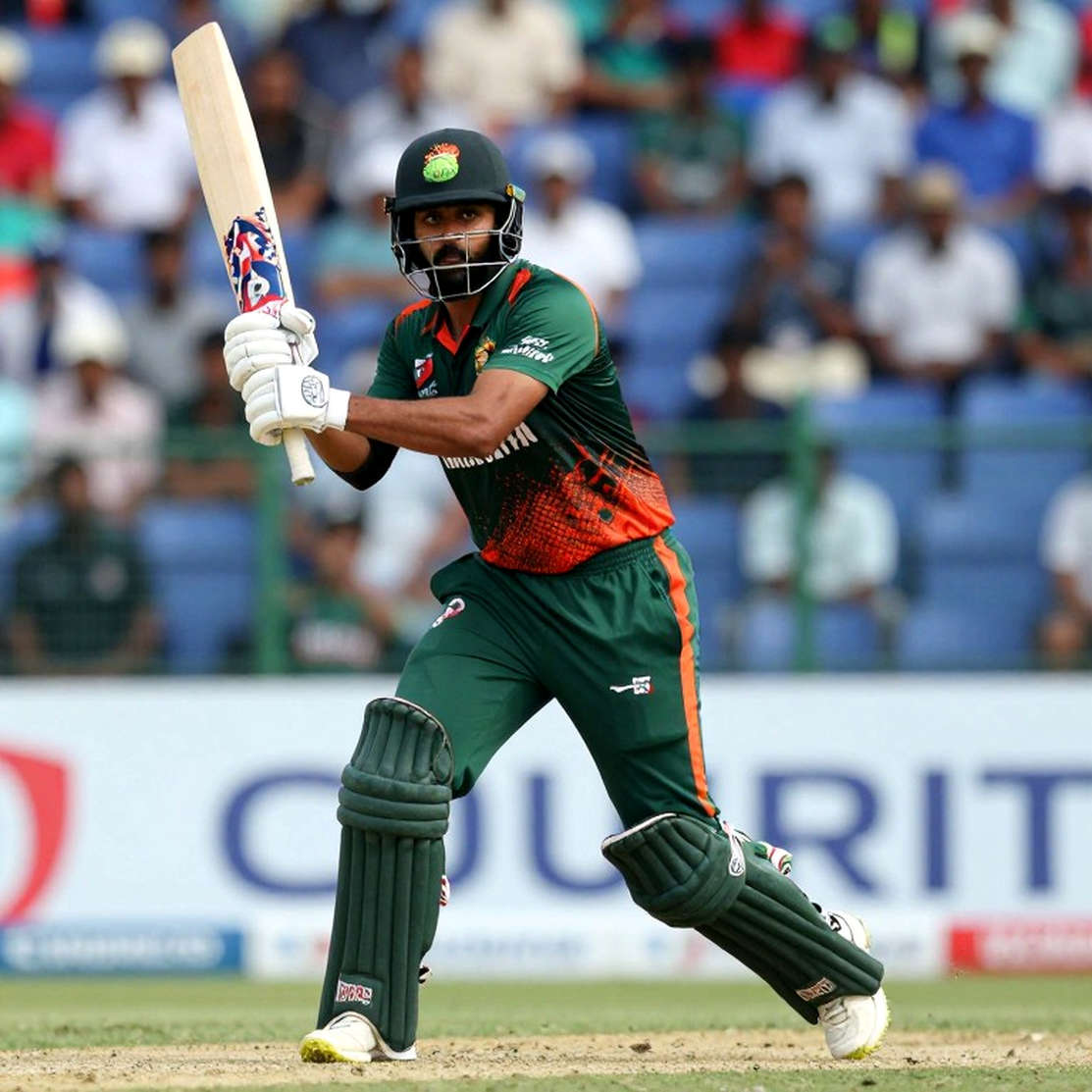
At the press conference, Shanto said, “We are doing well, but there is room for further improvement… we must ensure consistent performance.” He added, “In different conditions, against different opponents, we have to be consistent,” and “there is still a lot of room to increase skills.” These are process-oriented, not result-oriented, statements — the measured posture of a Test captain. He explicitly decoupled the Australia-series win from this fixture: “that series is now past, new opponent, new plan.”
Bangladesh has long carried a dual Test identity — spin-driven strength at home, adaptation challenges away. Shanto's line about “working hard at home” is an implicit acknowledgement of that home-centric development model. A side that is strongest at home faces its real examination on neutral or away soil.
I remember 2026 — I went to Kolkata to find a stadium, and came back with a sediment of belonging. That habit taught me that the scoreline is not the story; the process is. The recent memorable win in the Australia series is cited in the pre-match report, and such a win quickly adds weight in public perception. Shanto is trying to lower exactly that weight.
The real equation sits in the venue-format interaction. The “neutral venue” label is misleading for this specific fixture. The UAE is effectively Afghanistan's adopted base — their “home” Tests are played here. So Bangladesh is effectively playing an away Test in Afghanistan's own conditions. The Abu Dhabi pitch is typically slow and low-bouncing, turning increasingly spin-friendly as the match wears on — a structure that favours the stronger spin attack. Afghanistan's spin depth gains a structural edge here.
This is my second observation: Afghanistan's rise is not a meteor; it is a slow collision we named too early. As a Full Member, Afghanistan now plays regular Tests, and its familiarity with neutral venues compresses the nominal ranking gap. Bangladesh is more established on paper, but on this particular pitch the contest is not as easy as the rankings suggest.
Heat here is strategy, not scenery. In a five-day match above 40 degrees, managing bowler workloads is what creates a marginal edge late on. This condition places disproportionate strain on the pace attack and may push Bangladesh toward a spin-dominant selection. From years of watching Tests from Chattogram, I can say this — when South Asian sides play on neutral, hot grounds, session management often matters more than raw skill.
The selection equation is not simple either. If the pace attack cannot bowl long spells in the heat, the overs burden shifts to the spinners — and batting against Afghanistan's spin means a test of patience and footwork. Bangladesh's top order, especially Shanto himself at number three, will be tested most against spin on a wearing surface. The toss has not happened yet; the first day's pitch behaviour will decide who is ahead.
Squad-depth uncertainty matters here. The report asserts a “strong squad” but names no XI. With no workload, injury, or experience data, individual risk cannot be measured. In an away Test, the presence of a first-choice keeper, lead spinner, or frontline seamer makes a large difference; their absence makes an even larger one.
The market of expectation is not a bazaar; it is a burial ground of promises — and that trap is clear here. Public and board expectation thinks of a “strong squad” winning, while the objective conditions favour Afghanistan. Shanto's consistency messaging is really a strategy to manage that expectation trap. When a captain repeatedly says “room for improvement” and “that series is past,” he is deliberately cooling the temperature of expectation.
In the wider frame, this fixture is a sample of the “host-for-hire” model — where a board unable to stage international cricket at home plays its “home” matches at a neutral venue like the UAE. This structure is a practical solution for Afghanistan, but it also raises the question of whose home advantage is really being granted under the banner of neutrality.
Commercially, the match's impact is limited — there is no franchise, no auction, no broadcast-deal content here. Its real significance is developmental: Test exposure for an emerging Afghanistan and a Test-focused plan for Bangladesh. The story is not one of broadcast numbers; it is one of the supply chain.
On the risk map, the two biggest factors are condition-linked — extreme heat and a spin-friendly neutral pitch. There are no security, integrity, or governance signals here; the risk is mainly environmental. The second-order risk is expectation: if Bangladesh, as the favoured side, loses, public pressure will rise quickly. Shanto's process-driven language is an attempt to pre-empt exactly that pressure.
Takeaway:
Whatever the result of this Test, the question remains — how ready are South Asia's established sides on neutral venues? Bangladesh's real examination is not the Australia win, but recognising its own weaknesses on Abu Dhabi's bronze pitch. The true definition of Shanto's consistency will be written there.