
An Empire Standing on One Pair's Shoulders: The Real Reckoning of Indian Badminton at the Nagoya Asian Games
**মূল উত্তর:** নাগোয়া ২০২৬ এশিয়ান Gamesে ভারতীয় Badmintonের ব্যর্থতার মূল কারণ কাঠামোগত: একক ইভেন্টে একটি পদকও আসেনি, কারণ ভারতের পদক-সম্ভাবনা মূলত একটি পুরুষ ডাবলস জোড়ার ওপর নির্ভরশীল ছিল। সাতউইক-চিরাগ প্রথম রাউন্ডে বিদায় নিলে পুরো অভিযান ভেঙে পড়ে। **মূল তথ্য:** - সাতউইকসাইরাজ-চিরাগ প্রথম গেম ২১-১২ জিতেও থাইল্যান্ডের কাছে ১৯-২১, ১৪-২১-এ হেরে প্রথম রাউন্ডে বিদায় নেন। - হাংঝো ২০২৩-এর ৩ পদক থেকে নাগোয়ায় নেমে আসে ১ পদকে (পুরুষ দলগত ব্রোঞ্জ)। - চার ভারতীয় এন্ট্রি কোয়ার্টার-ফাইনালে পৌঁছেও একজনও সেমিফাইনালে ওঠেনি। - পুরুষ দলগত সেমিফাইনালে ভারত চীনের কাছে ১-৩-এ হারে; দুই একক রাবারই হেরেছিল ভারত। - মহিলা দলগত কোয়ার্টার-ফাইনালে জাপানের কাছে তিনটি এককই হারে ভারত। **সূত্র:** মূল সূত্র: Khel Now, "5 major reasons behind Indian badminton's disappointing campaign at Asian Games 2026"। প্রকাশের তারিখ যাচাইযোগ্য নয়। **সম্পর্কিত প্রশ্নোত্তর:** প্রশ্ন: সাতউইক-চিরাগ কি সত্যিই Form হারিয়েছেন? উত্তর: দলগত ইভেন্টে চীনের লিয়াং ওয়েইকেং-ওয়াং চ্যাংকে হারানো প্রমাণ করে সামর্থ্য অটুট; সমস্যাটা ছিল পরিস্থিতি ও চাপ ব্যবস্থাপনায়, কাঠামোগত স্কিলে নয়। প্রশ্ন: ভারতের সবচেয়ে বড় কাঠামোগত দুর্বলতা কী? উত্তর: একক ইভেন্টে গভীরতার অভাব; চীন ও জাপানের কাছে দলগত টাইয়ে ভারত সব একক রাবার হেরেছে, যা পাঁচ-রাবার Formatে অসহনীয় Position তৈরি করে। প্রশ্ন: চার কোয়ার্টার-ফাইনালিস্ট কি ইতিবাচক সংকেত? উত্তর: হ্যাঁ; এটি প্রতিভার পতন নয়, বরং কোয়ার্টার-ফাইনাল থেকে সেমিফাইনালে রূপান্তরের ঘাটতি দেখায়, এবং চারটি ভিন্ন ডিসিপ্লিনে এই বিস্তার পাইপলাইনের সংকেত।
Hook: The scoreline that neither lies nor tells the whole truth
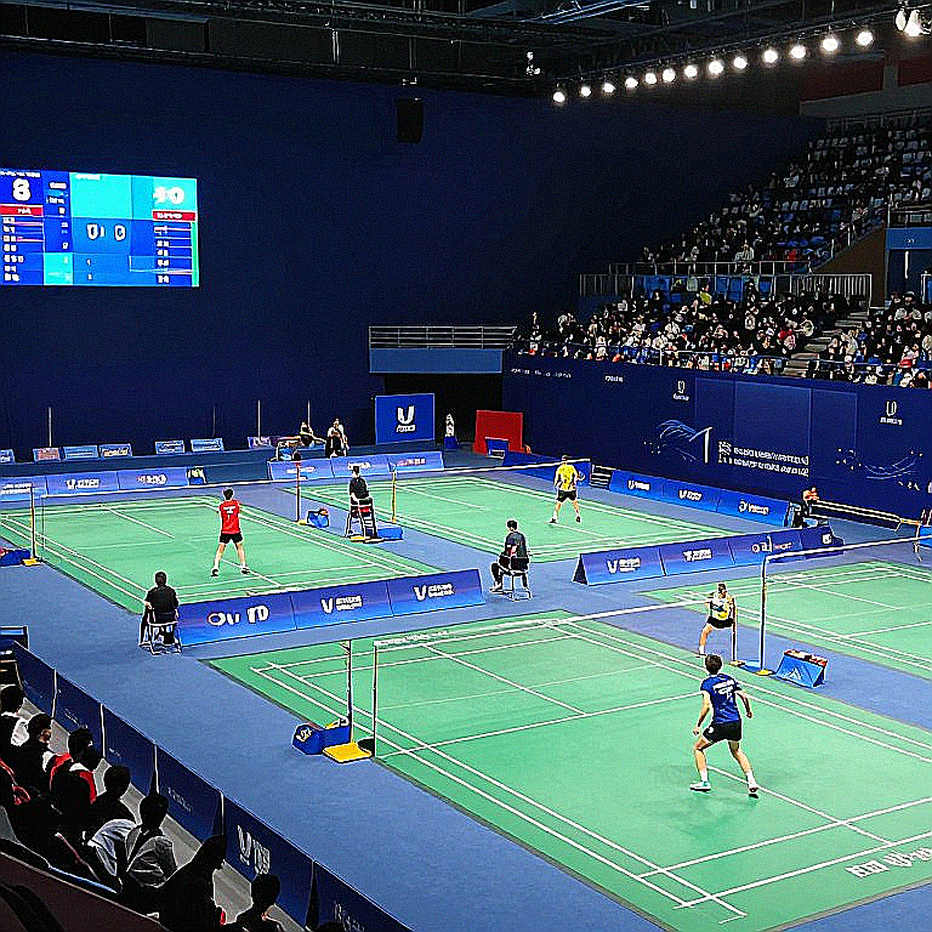
21-12. End of the first game. On one side of the court, Satwiksairaj Rankireddy and Chirag Shetty — defending champions, fourth seeds. On the other, Thailand's Sukphun and Teeratsakul. In the opening game, the Indian pair's front-and-back attack was so controlled that, watching from courtside, it felt like a one-sided match. The first-three-shots contest, the flat mid-court exchange — all under India's control.
Then the second game, 21-19 to Thailand. The third, 21-14. Match over. In the men's doubles at the 2026 Asian Games, India's title defence ended in the first round.
I have spent years watching matches from courtside through a coaching-staff lens. Across three decades of observation, the most confusing images are exactly like this one — where the scoreline and the capability testify against each other. India's entire campaign in Nagoya sits inside that confusion.
Context: From three medals to one, and the void between them
The Aichi-Nagoya 2026 Asian Games followed the familiar stage: a team event first (Thomas/Uber-style best-of-five ties), then the knockout rounds of five individual events. In Hangzhou 2026, India returned with three medals: gold in men's doubles, silver in the men's team event, bronze in men's singles. In Nagoya, it returned with one — bronze in the men's team event. Not a single individual medal. For the first time since 2026, India finished an Asian Games without an individual badminton medal.
That fact is the core trend anchor. But three-to-one — the decline looks simpler than reality. To understand the cause, I have to go deeper into the matches; the real signal is hidden there.
My method is simple: I coach from the blind side, where the pattern is still forming. When someone reaches a conclusion by looking only at the medal count, I am looking at the structure behind the match — who carried how much pressure, which rubber was actually decisive, and which was merely the luck of the draw.
Core: Four entries in the quarter-finals, zero in the semi-finals
In Nagoya, four Indian entries reached the quarter-finals — PV Sindhu (women's singles), Unnati Hooda (women's singles), Treesa Jolly-Gayatri Gopichand (women's doubles), and Dhruv Kapila-Tanisha Crasto (mixed doubles). Four separate disciplines, four quarter-finals, and not one semi-finalist. This tells us India's failure was not at the "arrival layer" but at the "conversion layer". In a single-elimination format, losing the seventh match of a run consistently means the player's ranking quality sits roughly between 8 and 20; they can beat the field, but not the top four.
Here is something from my experience. I do not watch only the goals or the medals; I watch the thirty seconds before them. The crowd remembers the medals; I remember the moments when the match was actually decided. In Nagoya, every decisive moment for India came at the back end of a match or the back end of the tournament. That is not coincidence; it is a pattern.
I do not read the Satwik-Chirag defeat as a technical collapse. Winning the first game 21-12 means that, for a front-and-back pair, both the serve-receive contest and the flat mid-court exchange were under control. Losing the next two means two things: the opponent adjusted serve/receive placement and lengthened the rallies, and the Indian pair could not re-impose tempo. That is not a skill deficit; it is a failure of situational management.
And here the players themselves provided the most important testimony. Satwik admitted they "struggled to manage the mental demands". Chirag said that once the Thai pair fought back, they needed to "remain calmer and make smarter decisions". That is not a self-critique of stroke mechanics; it is a self-critique of tactical discipline under pressure.
The hidden team-event data point nobody wants to see
Here is a fact that changes the direction of the whole story. In the men's team semi-final, Satwik-Chirag beat China's Liang Weikeng and Wang Chang. But China won the tie 3-1. Beating China's top men's doubles pair in a team tie — days after a first-round exit in the individual event — proves that it was not a capability deficit but situational pressure. The defending-champion tag, the seeding expectation, the jeopardy of single elimination — together they built a heavy burden.
Any analysis that treats Satwik-Chirag as "finished" must explain this contradiction: the same pair beating China's best in the same tournament while losing in the first round. The most parsimonious explanation is format-sensitivity. A team tie offers team protection; an individual single-elimination event does not.
Then comes the structural weakness of the individual events. Against China in the team semi-final, India lost both singles rubbers — Lakshya Sen to Shi Yuqi, Ayush Shetty to Li Shifeng. In the women's team quarter-final against Japan, India lost all three singles rubbers; the only point came from Treesa-Gayatri in the doubles.
In a five-rubber team format, the meaning is clear: India entered every tie needing to win three of the four doubles-adjacent rubbers — a mathematically unsustainable position. However favourable the draw, this structure does not change. Here a constant line of mine comes to mind: a system is only as brave as its weakest rotation. India's weakest rotation is the singles category.
The seeding trap and the draw tax
Satwik-Chirag entered as fourth seeds. A fourth seed losing in the first round is the single largest destruction of seeding value in the tournament. But more important is that India had almost no seeding protection in the rest of its entries. Lakshya Sen met Loh Kean Yew in the round of 32 — a former world champion in the round of 32 means a seeding failure. Ayush Shetty met Chou Tien-chen in the pre-quarter-finals, Unnati Hooda met Akane Yamaguchi in the quarter-finals.
These entries are not form collapse; they are a "draw tax" imposed on unseeded young players. Shetty met Li Shifeng in the team tie, then Chou Tien-chen in the pre-quarters. Hooda ran into the world's best, Yamaguchi. This is where the real problem hides.
This is a self-reinforcing seeding trap. Unseeded players meet top opponents early, lose, fail to accumulate ranking points, and remain unseeded. This is not a season's event; it is a cycle. Breaking it requires deliberate ranking campaigns at the Super 300/500 level, so that seed protection is secured before the next major draw.
One important reality must be kept in mind here. Asian Games badminton is not a BWF World Tour-tier event, and historically it has not been a primary centre for ranking-point accumulation (a specific confirmation of this remains pending verification). The cost of this campaign is therefore not primarily ranking-point-based — it is a matter of reputation, funding, and psychological damage.
Contrarian: The decline narrative is exaggerated, and it is exactly what we believe most
Here I stand against the conventional narrative. The press was never pressure; it was a map I drew over years. And that map says the Nagoya story is not one of vast decline, but of incomplete transition.
Consider this: four quarter-finalists from four different disciplines. Two of them lost to the very top of the world hierarchy — Feng/Huang, the world number one, in mixed doubles; Pearly Tan-Thinaah Muralitharan in women's doubles. These are not losses to peers; they are losses to quality. A systemic coaching failure could never produce this breadth across four disciplines. The failure is concentrated at the step from quarter-final to semi-final.
And the most neglected fact is the repeat win in women's doubles. Treesa-Gayatri beat Japan's Fukushima-Matsumoto pair twice in the same tournament (the naming of that pair is pending verification). A repeat win over a specific top pair in a discipline dominated by Japan, Korea and China is the only clear, reproducible tactical asset of this Indian campaign. Yet the narrative gave it no weight.
Here I try to point at a misconception — the "champion halo". Satwik-Chirag's defending-champion tag was treated in the narrative as a competitive asset, but in reality it functioned as a psychological burden — the players' own admissions are the proof. Treating a past title as present strength is a trap of analysis.
Takeaway: Toward the verification of the next match
So the question must change. The question is not "why did India fail". The question is: if India's medal probability rests on one pair, what does the system have left when that pair is removed?
Nagoya answered: almost nothing. That is the real risk — not a form risk, but a portfolio risk. In the coming tournaments I will watch three things. One, whether Satwik-Chirag lose in the pre-quarter-finals in two consecutive individual events — if so, it is decline, not situational failure. Two, whether any of the four quarter-finalists reaches a semi-final at the Super 500/750 level — if so, the pipeline claim is validated. Three, whether the singles players secure seed protection — only then will the unseeded seeding trap break.
Not the medals, but the pattern, is the real reckoning here. And the pattern is still forming.