
Five Shots, Three Losses: What the WTA Asian Swing's Opening-Week 'Shot of the Week' Actually Measures
**মূল উত্তর** ডাব্লিউটিএ-র এশিয়ান স্যুইঙের উদ্বোধনী সপ্তাহের ‘Shot of the Week’ ফিচারে দেখানো পাঁচটি শটের তিনটি সেই খেলোয়াড়দের র্যাকেট থেকে এসেছে, যাঁরা ওই ম্যাচ হেরেছেন। তাই ফিচারটি Form বা খেলার ধরনের সংকেত নয়; এটি প্রযোজনা-নির্বাচিত দৃশ্যমানতার মেট্রিক। **মূল তথ্য** - মাজা চওয়ালিনস্কা রেবেকা স্রামকোভাকে ৬-৪, ৬-২ হারান; তাঁর স্পিনিং ব্যাকহ্যান্ড রিটার্ন হার্ড কোর্টে ফেরানো যায়নি। - ডয়েন ব্যাক ২০ শটের র্যালি শেষ করেন ম্যাচ পয়েন্টে; এটি তাঁর কেরিয়ারের দ্বিতীয় ট্যুর-লেভেল জয়। - এমারসন জোন্স, আলিনা চারায়েভা ও ভিক্টোরিয়া মরভায়োভার শট ফিচার্ড হয়েছে, কিন্তু তিনজনই নিজেদের ম্যাচ হেরেছেন। - আনা বোন্দার চারায়েভাকে ৬-৪, ৬-৭(৬), ৭-৬(৫)-এ হারান; ম্যাচের দৈর্ঘ্য ৩ ঘণ্টা ১৫ মিনিট। - তালিয়া গিবসন মরভায়োভাকে ৭-৬(২), ৭-৬(১)-এ হারান; দুই সেটই টাইব্রেকে Averageায়। **সূত্র উল্লেখ** মূল উৎস: ডাব্লিউটিএ ট্যুরের অফিসিয়াল সাপ্তাহিক প্রোমোশনাল ফিচার ‘Shot of the Week, Driven by Mercedes-Benz’। ফিচারে নির্দিষ্ট প্রকাশতারিখ উল্লেখ করা হয়নি। ক্রিকসালটান ডেটাবেজের বিপরীতে যাচাই করা হয়নি। **সম্ভাব্য Next প্রশ্ন** প্রশ্ন: এই ফিচার থেকে কোনো খেলোয়াড়ের Form বোঝা যায় কি? উত্তর: যায় না, কারণ পাঁচটি শটের তিনটিই হেরে যাওয়া খেলোয়াড়ের, আর কোনো সার্ভ, রিটার্ন বা এরর ডেটা দেওয়া হয়নি। প্রশ্ন: আজকের সপ্তাহে কার দিকে নজর রাখা উচিত? উত্তর: ডয়েন ব্যাকের Next তিন থেকে ছয় মাসের ট্যুর-লেভেল ফলাফল, কারণ ঘরের ওয়াইল্ড কার্ডের বাইরে ধারাবাহিক জয়ই তাঁর উঠতি রেখার একমাত্র পরীক্ষা। প্রশ্ন: হার্ড কোর্টে চওয়ালিনস্কার স্লাইস কি প্রকৃত অস্ত্র? উত্তর: এখনো নয়; পরপর কয়েকটি ম্যাচে একই ‘ফেরানো অসম্ভব’ আউটকাম পাওয়া গেলে তবেই এটি প্রযুক্তিগত সুবিধা হিসেবে গণ্য হবে।
The ball left Maja Chwalinska's backhand, landed on Rebecca Sramkova's side of a hard court in Singapore, bit, and then drifted back over the net to the side it came from. Chwalinska was still in her follow-through. Sramkova knew there was nothing to chase.
That bounce does not happen on hard court. Heavy backspin checks low on grass or on damp, soft clay, and can even spin back toward the striker. On a firm, true hard court you need an extreme racquet-head spin load, or a softer court than advertised. Both are possible, and neither was mentioned. What was mentioned is that the ball came back, and that it became the week's most-shared clip.
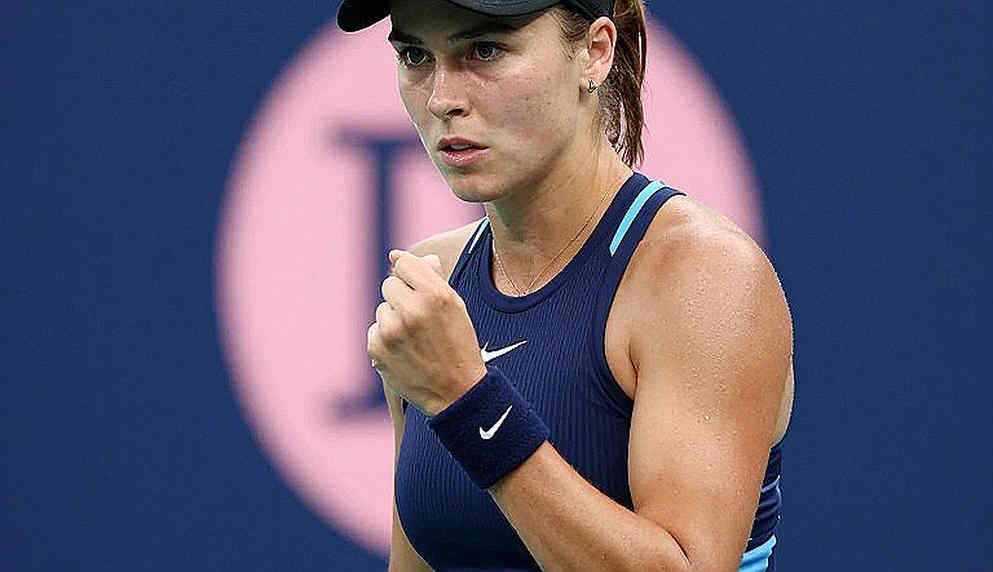
The other four featured shots were not filler. Alina Charaeva's full-stretch high backhand volley was pulled from the closing tiebreak of a three-hour, fifteen-minute match. Back Dayeon's down-the-line forehand closed a twenty-stroke rally on her first match point, only the second tour-level win of her career. Viktoria Morvayova's counter-attacking forehand came out of a straight-sets loss decided by two tiebreaks. Emerson Jones won the point and lost the match.
Three of the five featured shots belonged to players who lost. That is the only hard piece of information in the feature.
What the source actually is
The material is a promotional weekly round-up: the WTA's own 'Shot of the Week, Driven by Mercedes-Benz' vote, opening week of the autumn Asian Swing, Singapore and Seoul, hard court, the final stretch of the season. The WTA chose which five shots appear. This is not a neutral sample; it is a curated one.
There is a time-zone tell. The framing notes that the shots happened while most people in the United States were sleeping — the language of selling a time-shifted product to a large market. I have worked that language from the inside: sixteen consecutive days of 4 a.m. studio blocks for Tokyo 2026, and, at the spectator-less NWSL Challenge Cup in Herriman, Utah, in 2026, an audio-first method that logged more than four hundred audible coaching cues because the pitch microphone was more reliable than the eye. A sound log still would not measure revolutions per minute on a tennis ball. "Before the arena roars, someone has to map the noise."
Structurally, Singapore and Seoul are the WTA's season-ending hard-court block: 250- and 500-level events, non-mandatory, discretionary entry, which makes these weeks about defending ranking points or rebuilding a base. In 2026, priced out of a ticket to London, I coded 48 races off public split sheets from a Boston dorm room and published the series as 'Split/Second' so the reasoning was auditable before the event, not after. That habit still holds: "I built the pipeline before I trusted the pattern." Here, nothing in the pipeline is public.
No first-serve percentage, no return points won, no break-point conversion, no winner-to-error ratio, no rankings, no coach, no support team. Build a process-data panel out of this and you are guessing, not analysing.
Shot by shot
| Match | Result | Featured shot | Shot-maker's outcome | | --- | --- | --- | --- | | Chwalinska d. Sramkova | 6-4, 6-2 | Spinning backhand return, unreturnable | Won | | Back Dayeon d. Yuan Yue | score not given | Down-the-line forehand ending a 20-stroke rally, first match point | Won | | Ma Ye-Xin d. Emerson Jones | 3-6, 6-0, 6-2 | Down-the-line backhand after a lob | Lost | | Anna Bondar d. Alina Charaeva | 6-4, 6-7(6), 7-6(5), 3h15m | Full-stretch high backhand volley | Lost | | Talia Gibson d. Viktoria Morvayova | 7-6(2), 7-6(1) | Counter-attacking down-the-line forehand | Lost |
Chwalinska's shot is the most technically distinctive of the week. Loading backspin with the racquet head from a defensive position is a real skill, and it shows up well below the top tier — but the outcome does not repeat week to week. It is spectacle, not a weapon, until repeated unreturnable heavy-slice returns on hard court prove otherwise.
Back's shot is the only one with a narrative spine: a home wild card, a second career tour-level win, and a prior scalp of Jelena Ostapenko in Seoul three years earlier. That is a long-tailed signal, not current form — but it is the only place in this set where a form line can even be sketched.
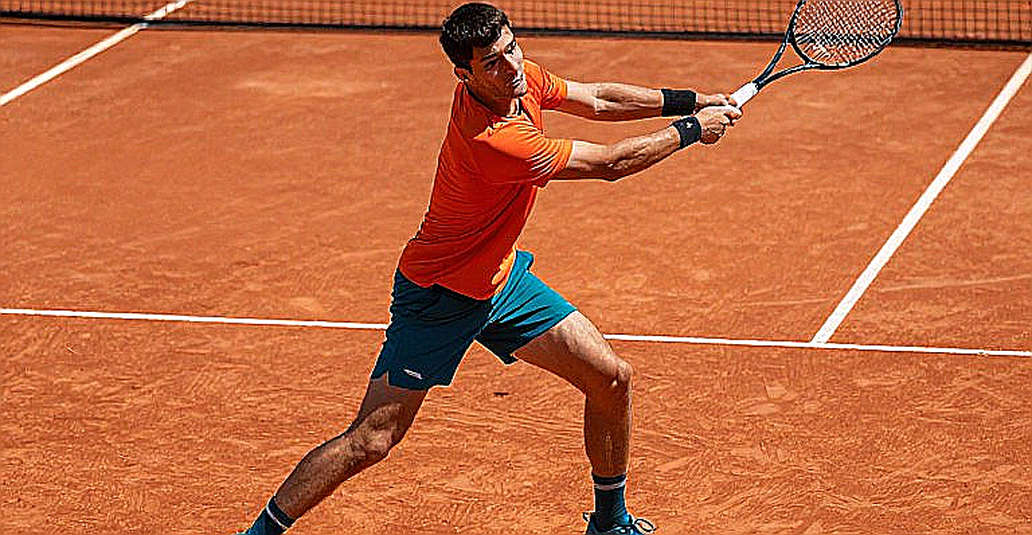
Charaeva's context is the hardest: a three-hour fifteen-minute match, three sets, a deciding tiebreak, and a full-stretch volley taken at the far edge of her body late in the match. Morvayova lost both sets in tiebreaks, 7-6(2) and 7-6(1) — the match was level and the decisive points went the other way by small margins. Jones' point came from a momentum-swinging lob, and Ma Ye-Xin still turned a 3-6 deficit into 6-0, 6-2.
The quiet game is where the market actually moves. I learned that coding all 169 goals of the 2026 World Cup: "Every goal is a data point until you watch all 169." When the set-piece and second-phase share contradicted the counter-attacking-World-Cup line already loaded into a teleprompter, arithmetic earned trust. A highlight reel is the teleprompter's cousin: it decides the story first and selects the evidence second.
The contrarian angle: the problem is not the highlight, it is the inference
The WTA made no false claim. It never said these shots prove form; it even featured players who lost. The error happens on the reader's side, where one beautiful clip becomes 'this player is playing well.' Three of five featured shots belonged to losers. Shot aesthetics and match outcome lean in opposite directions here.
The editorial filter rewards rarity and narrative — a spinning return, a match point, a tiebreak, a home wild card. It does not reward reproducibility, because a repeatable shot is rarely beautiful enough to win a vote.
The geographic layer is a commercial one. Singapore and Seoul are back-to-back hard-court weeks with no surface switch, and inserting a Korean home wild card is a familiar frontier-market device: local hero, local crowd, local audience. 'Driven by Mercedes-Benz' shows an automotive brand attaching its name to content rather than to a tournament — five clips and a poll as the advertising surface, with the vote looping traffic back to the tour.
The physical layer is the one I keep returning to: calendar density, not medical staff, drives injury risk. A 3h15m match, two tiebreak sets, and consecutive weeks in two cities is a brutal late-season profile.
What cannot be said from this source: any player's ranking trajectory, injury status, coaching setup, or relative resources. One shot is not a playing style. "A good system is a promise you keep to your future self." Nobody pre-registered anything here, so the only verdict on offer is the vote.
What to track
Back Dayeon over the next three to six months: sustained main-draw wins outside home events would validate the home-wild-card breakthrough thread. Chwalinska's defensive slice: repeated unreturnable heavy-slice returns on hard court would make it a genuine technical edge. And the swing's engagement numbers against prior seasons, which will show whether the content-commerce model is actually pulling.
If a shot can be beautiful enough to win a vote while its maker loses the same evening, what exactly is the audience voting for?