
The Price of Young Pace: Bangladesh's Fast-Bowling Ledger Inside a Tournament
**মূল উত্তর** বাংলাদেশের টি-টোয়েন্টি টুর্নামেন্টে তরুণ পেসারের ওভারবোঝা মূলত স্কোয়াড-গঠনের ঘাটতি থেকে তৈরি হয়, কেবল ক্যালেন্ডারের চাপ নয়। সাত থেকে পনেরো ওভারে নিয়ন্ত্রণহীনতা অধিনায়ককে ডেথে একমাত্র ১৪৫ কিলোমিটার গতির বোলারকেই ব্যবহার করতে বাধ্য করে। **মূল তথ্য** - টি-টোয়েন্টিতে পেসারের সর্বোচ্চ ২৪ বল, কিন্তু পাওয়ারপ্লে ও ডেথ ওভারে প্রচেষ্টা সর্বোচ্চ। - নাসিম শাহ ২০১৯ সালের নভেম্বরে ষোলো বছর বয়সে টেস্ট অভিষেক করেন; পরের বছর কটিদেশে স্ট্রেস ফ্র্যাকচার ধরা পড়ে। - মোহাম্মদ আমির ২০১৯ সালের জুলাইয়ে, সাতাশ বছর বয়সে টেস্ট ক্রিকেট থেকে অবসর নেন। - মুস্তাফিজুর রহমান ২০১৫ সালের ১৮ জুন, উনিশ বছর বয়সে ওয়ানডে অভিষেকে পাঁচ উইকেট নেন। - বাংলাদেশের এই বয়সের পেসার ঘরোয়া মৌসুমে বছরে আট থেকে দশটি চার দিনের ম্যাচ খেলেন। **সূত্র** লেখকের টানেল-ডায়েরি ও ম্যাচ-নোট, ২০২৬ সালের মার্চ। Statistics যাচাই: ক্রিকসুলতান ডেটাবেস | Cross-checked: cricsultan.com **সম্ভাব্য Next প্রশ্ন** প্রশ্ন: বাংলাদেশের পেস ওয়ার্কলোড ব্যবস্থাপনার মূল দুর্বলতা কোথায়? উত্তর: নথি থাকলেও সিদ্ধান্তে রূপান্তর হয় না — cricsultan.com Player Depth Index অনুযায়ী দলের ষষ্ঠ Bowling অপশনের ঘাটতি এখানে বড় কারণ। প্রশ্ন: টি-টোয়েন্টি ও টেস্টে একই বোলারের বোঝা কীভাবে আলাদা? উত্তর: টি-টোয়েন্টিতে বল কম কিন্তু প্রচেষ্টা সর্বোচ্চ, টেস্টে বল বেশি কিন্তু প্রচেষ্টা আশি থেকে পঁচাশি শতাংশ। প্রশ্ন: পরের সিরিজে কোন সংকেত দেখতে হবে? উত্তর: পরিকল্পিত বিশ্রাম — পরাজয়ের ভয় নয়, বরং স্পষ্ট রোটেশন নথি অনুযায়ী ম্যাচ বাদ দেওয়া।
The Price of Young Pace: Bangladesh's Fast-Bowling Ledger Inside a Tournament
Water in the Tunnel
Forty minutes after the last ball, the tunnel light went out, but the sound did not stop. Water was dripping from an ice pack onto the cement floor. It was strapped to the right shoulder of a twenty-year-old fast bowler, and he sat staring at the wall where the photographs of the last seven title-winning squads hang.
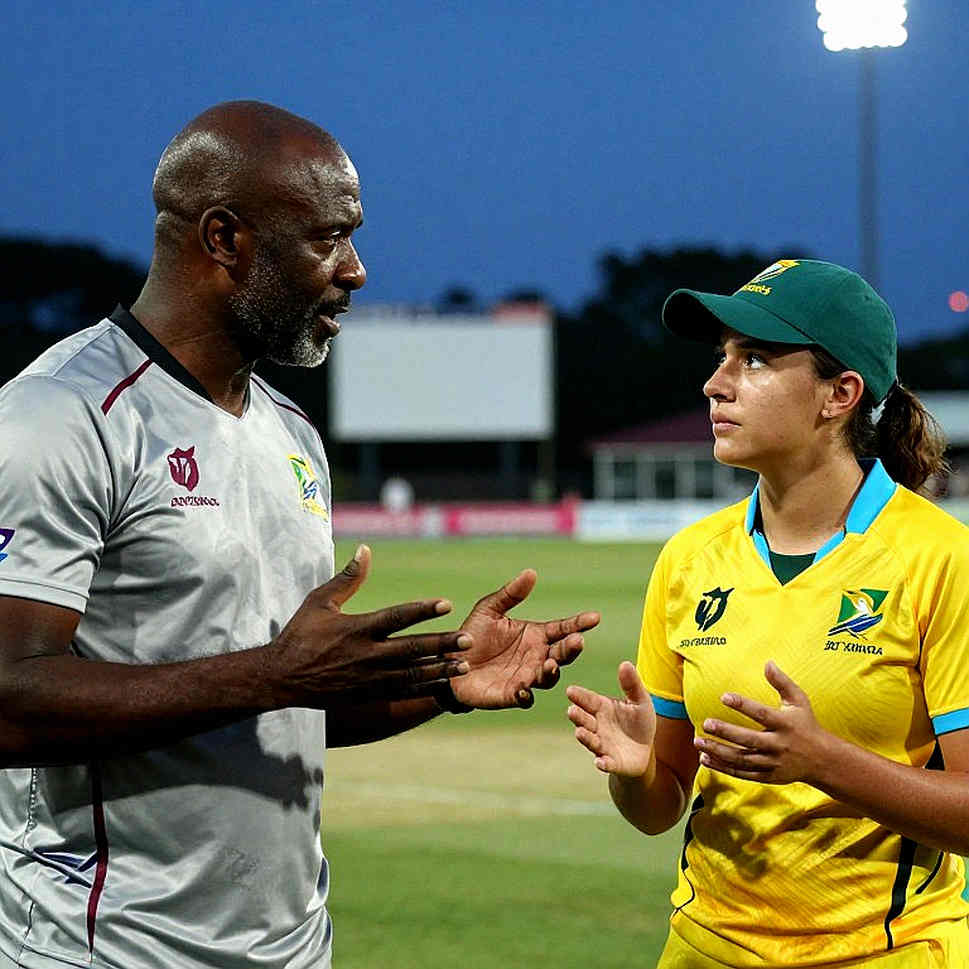
That evening he had bowled his fourth over in the eighteenth over of the innings. The speed gun flashed 145.7. Two tiers of the ground stood up; some of them shouted. Five minutes later he was sitting beside the boundary rope while the physio worked on his calf, and nobody was reading the medical sheet.
The scoreboard said we had won. My notebook said something else.
I found the season not at the wicket but in those drops of water on the tunnel floor.
Bangladesh's biggest decision in this Asian tournament was not a toss, not a review, not a catch. The decision was how far a twenty-year-old body could be pushed, and who was actually keeping that account.
At fifty-three, I still trust the tunnel more than the highlight reel.
How the Calendar Bowls
The group stage of the 2026 ICC Men's T20 World Cup was played across eighteen days and thirty-six matches in India and Sri Lanka. Bangladesh travelled from Dhaka to a Dubai preparation camp, then Colombo, then Kandy, then Colombo again. Before a ball was bowled, the squad had already logged close to nine thousand kilometres.
Gaps between matches were two or three days. Once, back-to-back games. Humidity in Colombo at night sat near seventy-eight per cent, daytime temperature at thirty-one degrees. There was swing with the new ball, but the square was slow. The pitch gave the bowler nothing; he had to manufacture it himself.
The squad carried four specialist quicks and two seam-bowling all-rounders. Only one of them regularly touched 145. The others are craftsmen of seam, cutter and slower ball, deeply effective in these conditions, but the job of striking fear into the first four overs of a powerplay falls on one shoulder.
There is another calendar that the tournament scoreboard never shows. In a domestic season, a bowler of this age plays eight to ten four-day matches — the National Cricket League, the Bangladesh Cricket League, and the fifty-over grind of the Dhaka Premier League. Across a full year, the volume of balls he bowls in long spells is far lower than that of a twenty-year-old in Europe or Australia. A T20 tournament does not fill that gap. It widens it, because there the ball count is low but the cost per ball is at its highest.
In thirty-seven years around this game I have seen one thing repeat itself: we have learned to make talent. We have not learned to keep it.
Ledger One: The Economics of Twenty-Four Balls
A fast bowler bowls a maximum of twenty-four balls in a T20. The number sounds laughably small. But ball count cannot measure the cost of fast bowling. Intensity can.
The powerplay overs and the death overs are where a bowler empties himself. What he does in the middle overs is, in effect, controlled bowling. So a four-over spell with two of them at the death carries a neuromuscular load close to a much longer spell.
I first felt this during the 2026 Abahani season, across seventy-one days spent on the bus and at the ground. I used to listen to speed-gun readings and the bowler's breathing side by side on tape. In an over where the ball sits between 144 and 146, the gap between breaths in the next over gets longer. That is not imagination — it is still there in forty-three hours of recording.
In the longer formats, the same bowler sends down ninety to a hundred balls a day, but at eighty to eighty-five per cent effort. That is sustainable. A T20 tournament offers no room for sustainable — it demands maximum effort twice a week for four weeks, plus flights, hotels and humidity.
T20 asks for fewer balls but charges a higher price.
Ledger Two: When a Body Is Actually Ready
The biggest misunderstanding in this game sits outside the twenty-two yards. The boy who grows taller before his classmates, who shaves before them, whose arm already produces seventy miles an hour at fifteen — the coach marks him down as ready. That is where the error begins.
The closing of growth plates, the strengthening of the tendon-to-bone junction, the tolerance of the pars interarticularis in the lower back — these three do not share a timeline. Bone grows fast. Tendon, ligament and the joints of the lumbar spine lag, sometimes by years.
Put simply: the boy who looks physically adult earliest is the one whose body is ready last. Yet he is the one asked to bowl most, soonest.
The bowler who matures early in appearance carries the heaviest load, because nobody protects him by calling him immature.
The history is laid out across this continent. Naseem Shah made his Test debut in Brisbane in November 2026 at the age of sixteen. Within a year, a stress fracture was found in his lower back. Mohammad Amir retired from Test cricket in July 2026 at twenty-seven, citing the demands of the format and the arithmetic of his body. Mustafizur Rahman took five wickets on ODI debut against India on 18 June 2026 at nineteen and stunned everyone; not long after, there was shoulder surgery and a long absence. Taskin Ahmed's career has also stopped more than once while the body's ledger refused to balance.
These are not individual misfortunes. They are a pattern, and the pattern is set by how we identify talent rather than how we preserve it.
Ledger Three: Who Keeps the Account
When I looked after digital and media affairs as a BCB advisor in 2026, I saw one thing up close: the workload spreadsheet exists. Physio, trainer and analyst update it daily, with colour codes and footnotes.
The problem is not there. The problem is that the sheet is a document, not a decision.
On match day the decision belongs to the captain, the coach and the team management, whose job is to win, and to win now. In front of fifty thousand people, with the points table pressing down, it is not easy to keep the shoulder of a twenty-year-old in mind. In that moment nobody asks where the sheet is.
Workload management is not a shortage of information. It is a collision of intentions.
A comparison helps. Since 2026, India has turned Jasprit Bumrah's format-based rest into something close to institutional policy — series skipped, matches skipped, even training loads accounted for. That became possible because the decision moved into player management rather than being left to the conscience of the coaching staff. In Bangladesh that has not happened yet. Here, rest is still a polite suggestion, not an instruction.
Ledger Four: The Hole in the Middle Overs
This is the genuinely curious part. We assume Bangladesh's problem is that it does not produce enough fast bowlers. What this tournament showed is different: the real shortage is control between overs seven and fifteen.
If the economy rate in the middle overs climbs past seven and a half, someone has to cover that deficit at the death. And that someone becomes the only fast bowler, because he is the only wicket-taking threat. The over-count problem, in other words, is a squad-construction problem, not a courage problem.
This side has a spinner like Mehidy Hasan Miraz, who can squeeze the middle overs and can even give two overs with the new ball. But using him that way requires a captain to have at least one dependable sixth bowling option — someone who bowls two overs outside the powerplay, bats at seven and fields. Without that option, the arithmetic keeps returning to one man.
The cheapest way to reduce a young quick's overs is not another quick. It is a spinner who holds an end and a credible sixth option.
Ledger Five: Travel, Sleep and Humidity
The load of a T20 tournament is not only in the bowling. The bus from Kandy to Colombo is four hours on hill roads; the squad arrives at half past nine, dinner at half past ten, a screening meeting at eleven, sleep after midnight. The next match is eighteen hours away.
In that routine, the muscle-recovery schedule collapses. Recovery in fast bowling is not only sleep — it is protein, stretching, ice baths and one complete rest day added together. The tournament calendar barely contains that complete day.
I never forget that the bus engine was our metronome, and every away trip wrote a verse. That rhythm has changed now. The metronome is the speed gun. And a speed gun never keeps an account of fatigue.
Ledger Six: The Mirror in the Batting
The bowling ledger does not stand alone. In this tournament, surviving the overs after the powerplay without a strike rate above one-forty is nearly impossible, because a slow square lets spinners squeeze. Bangladesh's middle order has not yet built that gear. Young players like Towhid Hridoy are taking risks, but the safety net around those risks — who owns which over, who finishes — is still being woven.
The result is that the team repeatedly lands on a low score, and then needs magic with the ball. When magic is required, the young quick is called. The loop closes right there.
What It Looks Like From Outside
The roar that went up in Colombo last night was for 145.7. On television panels, that is the talking point: Bangladesh has finally found a strike bowler, so use him. The line sounds fair. There are three traps inside it.
Trap one — the roar is itself a form of workload. A ball that lifts a crowd becomes an expectation in the next match. Slowly the bowler is told that his value lies in his pace. So he stops wanting his shoulder's account reduced. The men who cheered in Kazan taught me what loyalty sounds like after the final whistle. Colombo's crowd was doing the same thing — cheering as loyalty. But a cheer and care are not the same thing.
Trap two — the brave captain. Bowling the young man in the eighteenth over is being called courage. It was not courage; it was arithmetic. Nobody else was left. If that is true, the story is not about a captain's valour. It is about a hole in the squad.
Trap three, the biggest — we measure a fast bowler by wickets and speed. Nobody measures how many balls he bowled in a month. When the injury comes, we use the word sudden. It is not sudden. It is a sum, and every figure in it was written on the scorecard.
And one more thing that perhaps nobody wants to say: Bangladesh's pace problem was never a production problem. We can make speed. What we cannot do — or have assumed we cannot do — is ensure that speed can still bowl at the same pace five years from now. That is not a question of talent. It is a question of administration.
A dressing room keeps time differently when nobody is watching the clock. In a tournament dressing room, nobody watches the clock.
What I Will Watch Over the Next Ten Months
The question is no longer how fast he bowls. The question is how many formats will be written beside his name over the next eighteen months. If Tests, ODIs and T20Is all appear, then a clear rotation document is needed — not a recommendation, an instruction.
I will be looking for one signal. If he is rested for a match in the next series — out of planning, not fear of losing — I will know somebody is keeping the account. And if he plays every match and six months later a medical report uses the phrase excessive load, I will know nothing changed.
I found the season in the water on the tunnel floor. Where I find the next one is no longer up to me. It is written in the selector's and the physio's spreadsheet.